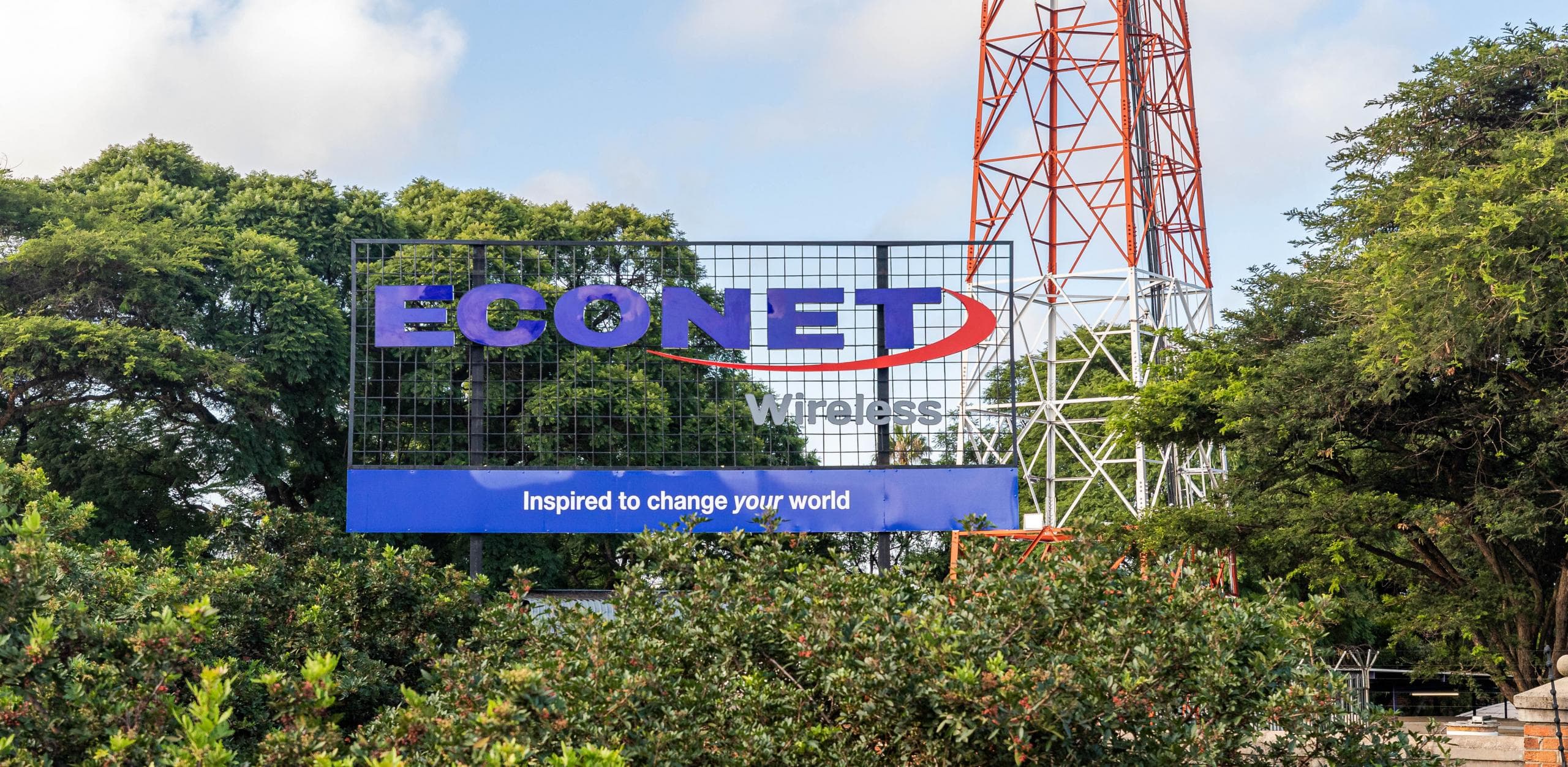
Econet Wireless Zimbabwe has deployed 60 new fifth-generation (5G) sites across the country, betting that faster data speeds and improved reliability will translate into higher usage at a time when data and internet services already account for 42% of group revenue.
The rollout is part of a broader network build that includes a core network upgrade completed in the second half of the financial year ended February 28, 2025, plus a mix of new site commissioning, radio access modernisation, and microwave link upgrades, according to the company’s chairman James Myers.
What Econet built, and how fast the network is changing
Myers said Econet commissioned 77 new sites, modernised 246 radio access sites, and upgraded 265 microwave access links during the year. The company also deployed 10 lightweight base stations aimed at providing mobile coverage in remote rural areas, where network economics are harder and service gaps are most visible.
Econet says the 5G expansion is designed to deliver lower latency, improved reliability, and higher speeds, positioning the operator to compete more aggressively in a market where customers increasingly judge networks on video streaming performance, mobile payments uptime, and consistency of coverage rather than headline pricing.
The contradiction: network investment rises while margins soften
While Econet is presenting the rollout as a competitive advantage, the financials show pressure underneath. The group’s earnings before interest, taxation, depreciation and amortisation margin softened to 47% from 48%.
That shift is small but meaningful in telecoms, where heavy capital expenditure and energy costs can squeeze profitability even as traffic grows. The company is essentially trying to run faster to stay in place: invest more in coverage and capacity, while also cutting operating costs to protect margins.
Traffic growth is strong, but it raises a capacity question
Myers said the mobile network operator business recorded year-on-year growth in data traffic of 36% and voice traffic of 23%, which he attributed to the modernised network and product innovation.
Rapid traffic growth usually creates a second-order problem: capacity must keep up, backhaul must be upgraded, and quality of service must remain stable in peak hours. The 5G rollout and microwave upgrades suggest Econet is trying to stay ahead of that curve, but customers will measure success by dropped connections, average speeds, and congestion at busy sites.
AI is the next lever, and it is being framed as a cost defense
Myers said the group plans to deepen artificial intelligence infusion into operations to improve efficiencies and productivity, and to create more seamless customer experiences across business segments.
In practical terms, AI in telecoms is often used for network optimisation, customer service automation, fraud detection, and targeted maintenance that reduces downtime. If Econet executes well, the benefits should show up as fewer outages, faster fault resolution, and lower operating costs per gigabyte delivered.
What happens next
Econet has signaled continued investment in digital transformation and new technologies. The immediate test is whether the 60 new 5G sites translate into visible improvements in the places where demand is highest, and whether rural lightweight stations move from pilot-scale coverage into a sustained expansion that closes the last-mile gap.
Additional reporting sourced from Econet Wireless Zimbabwe. The Granite Post has independently verified key details.