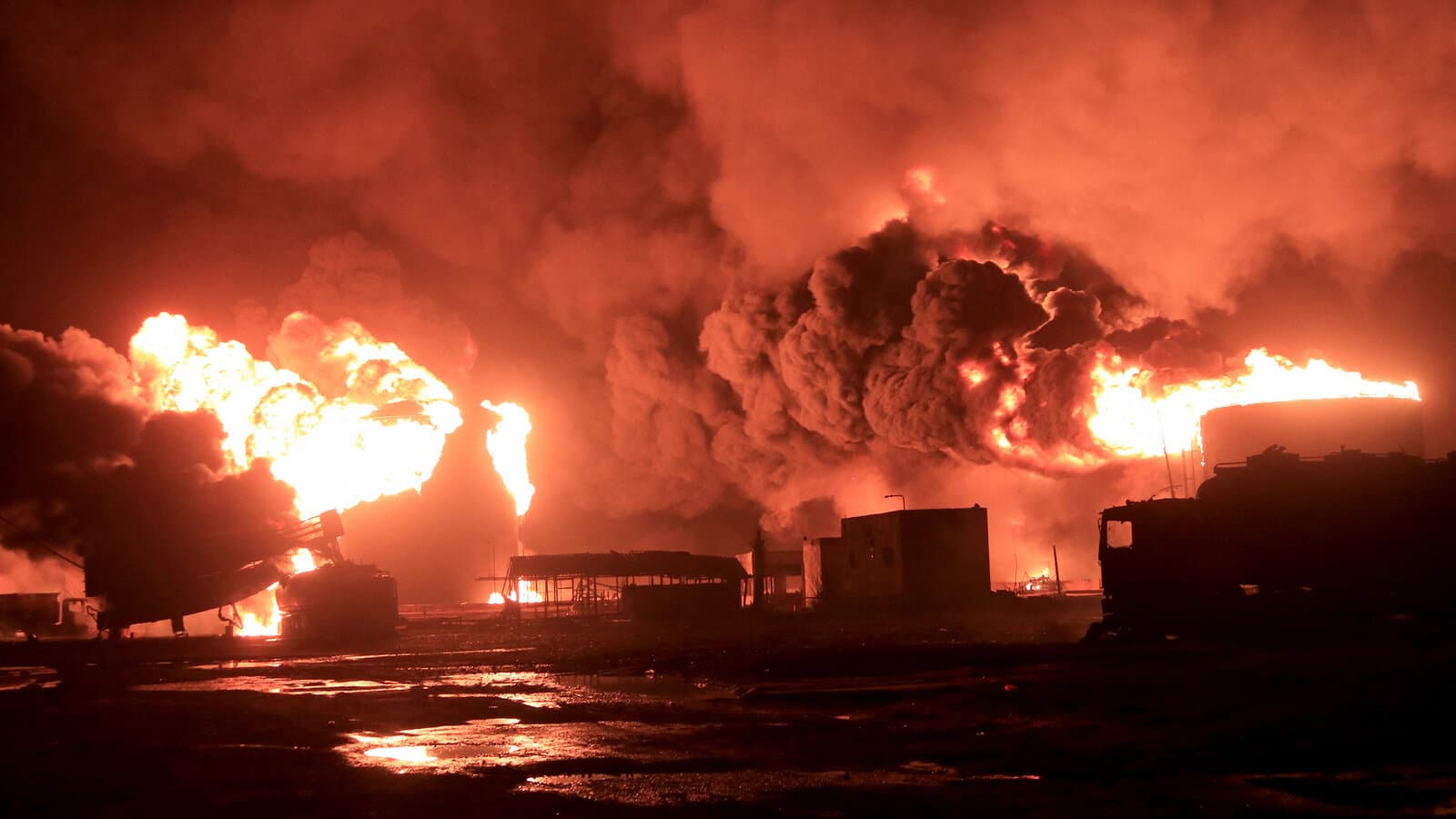
Israel’s military said Yemen launched a missile toward Israel early Saturday, the first time Israel has faced fire from Yemen since the Middle East war escalated.
Sirens sounded around Beer Sheba and areas near Israel’s main nuclear research center overnight Friday into Saturday as Iran and Hezbollah continued attacks on Israel, according to the report.
Israel reports first Yemen missile as Houthis weigh entering the war
The Houthis, a Tehran-backed rebel movement that has controlled Yemen’s capital Sanaa since 2014, did not immediately acknowledge the launch. The group had largely stayed out of the current conflict while maintaining an uneasy ceasefire with Saudi Arabia after years of fighting.
A day earlier, a Houthi military spokesman, Brig. Gen. Yahya Saree, issued a prerecorded warning that the group could intervene directly if escalation continues.
“We affirm that our fingers are on the trigger for direct military intervention.”
Brig. Gen. Yahya Saree, Houthi military spokesman (as quoted by The Associated Press)
Red Sea shipping risk returns as markets focus on Hormuz
The possible Houthi entry into the war revives the threat to commercial traffic through the Red Sea corridor. The report notes that attacks on vessels during the Israel-Hamas war upended shipping there, and that the Houthis previously attacked more than 100 merchant vessels with missiles and drones, sinking two and killing four sailors from November 2023 to January 2025.
That potential disruption lands while global shipping is already strained by Iran’s grip over the Strait of Hormuz, a key chokepoint for global energy. The risk now is that pressure spreads from one maritime corridor to another, compounding insurance costs, rerouting, and delays.
Israel strikes Iranian nuclear sites as Iran hits a Saudi base
The report says Israel struck Iranian nuclear facilities hours after threatening to escalate its campaign. Iran vowed retaliation and struck Prince Sultan Air Base in Saudi Arabia, wounding at least 10 American troops, including two seriously, according to two US officials cited by the report. Several refueling aircraft were damaged.
Iran’s Atomic Energy Organization said the Shahid Khondab Heavy Water Complex in Arak and the Ardakan yellowcake production plant in Yazd Province were targeted, and said there was no risk of contamination. Israel later described the Yazd strike as a major blow to Iran’s nuclear program, the report said.
“Iran will exact HEAVY price for Israeli crimes.”
Abbas Araghchi, Foreign Minister of Iran (as quoted by The Associated Press)
A narrow humanitarian opening at Hormuz highlights the wider contradiction
Before the Yemen launch, the report describes a limited breakthrough: Iran agreed to allow humanitarian aid and agricultural shipments through the Strait of Hormuz after a United Nations request, with Iran’s UN ambassador in Geneva Ali Bahreini saying Iran would facilitate such movement.
“This measure reflects Iran’s continued commitment to supporting humanitarian efforts and ensuring that essential aid reaches those in need without delay.”
Ali Bahreini, Iran’s ambassador to the United Nations in Geneva (as quoted by The Associated Press)
That selective opening underlines the core contradiction in the standoff: Iran signals flexibility for aid, while the broader conflict keeps intensifying and the threat to commercial shipping remains unresolved.
What happens next
If Yemen-based attacks become sustained rather than symbolic, the war’s most dangerous front may shift from missile exchanges to maritime disruption, where a single week of sustained risk can reorder global trade routes and costs long after the shooting pauses.