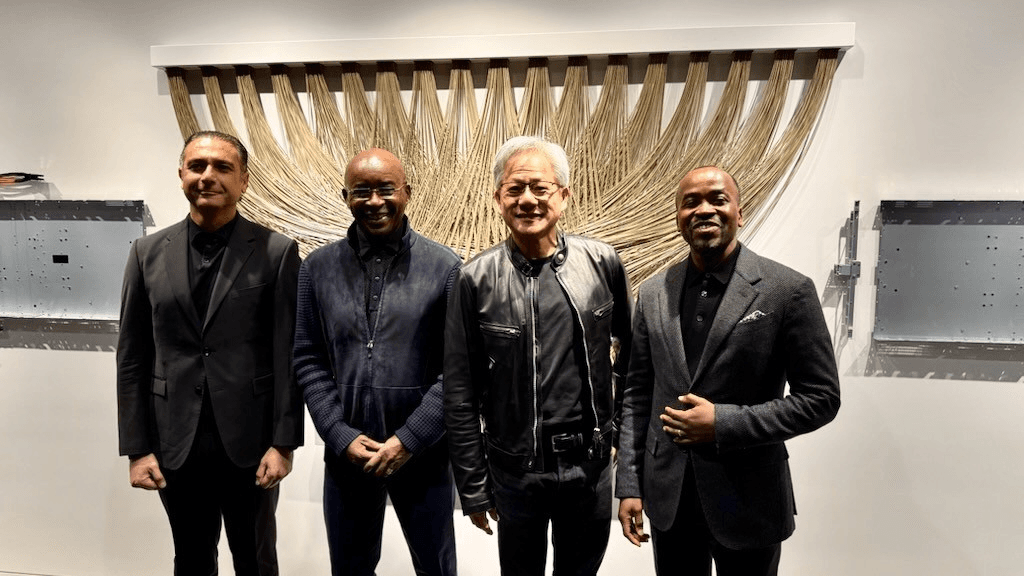
Zimbabwean billionaire Strive Masiyiwa is once again placing Africa at the centre of a major global technology shift. Through his company Cassava Technologies, Masiyiwa has partnered with American semiconductor giant NVIDIA to build what is being described as Africa’s first AI factory network.
The project, valued at approximately $720 million, aims to create a continent-wide network of high-performance computing infrastructure designed specifically for artificial intelligence development.
If completed as planned, the initiative could dramatically change how African companies, researchers, and governments access the computing power required to build modern AI systems.
Africa’s Entry Into the AI Infrastructure Race
Artificial intelligence development requires enormous computational resources. Most AI models today are trained using powerful GPU processors manufactured by companies such as NVIDIA.
Until now, most African developers and businesses have relied heavily on cloud infrastructure located in Europe, the United States, or Asia to access that computing power.
The Cassava–NVIDIA partnership seeks to change that reality.
The plan is to deploy a network of AI-ready data centres across Africa, each equipped with advanced NVIDIA GPU systems capable of supporting large-scale AI workloads.
These facilities will allow companies, startups, universities, and governments to run AI training models locally instead of depending entirely on overseas cloud infrastructure.
Full deployment of the AI factory network is expected by the end of 2026.
Zimbabwe Positioned at the Core
Zimbabwe could play a strategic role in the development of the project.
Cassava Technologies maintains strong operational ties to Zimbabwe through Masiyiwa’s broader telecommunications and digital infrastructure ecosystem.
The country is also currently pursuing its own ambitions to become a regional technology hub.
In January 2026, the Zimbabwean government announced plans for a 300-hectare industrial technology park that will include a large AI-ready data centre powered by a dedicated 100-megawatt solar energy facility.
Such infrastructure would be particularly attractive for AI computing operations, which require both significant electrical capacity and stable power supply.
The overlap between Zimbabwe’s technology park ambitions and the Cassava-NVIDIA project could position the country as a key node in Africa’s future AI infrastructure network.
Potential Impact Across Multiple Industries
The availability of AI infrastructure inside Africa could have far-reaching implications.
In agriculture, AI models trained using local weather, soil, and crop data could help farmers optimise planting schedules, detect crop diseases earlier, and improve yields.
In healthcare, AI-assisted diagnostic tools could help medical professionals identify illnesses more quickly, particularly in rural areas where specialist doctors are scarce.
In education, AI-driven learning systems could help personalise lessons for students and provide additional teaching support in classrooms with limited resources.
Financial services, logistics, mining, and telecommunications are also sectors likely to benefit from improved access to artificial intelligence computing capacity.
Opportunities for Zimbabwe’s Startup Ecosystem
Zimbabwe’s technology startup scene has been growing steadily in recent years.
Entrepreneurs in fintech, agritech, digital commerce, and software development have been launching new ventures despite facing limited access to funding and infrastructure.
One of the biggest obstacles for many startups has been the high cost of cloud computing, particularly when relying on servers located outside the continent.
If AI infrastructure becomes available locally through the Cassava network, Zimbabwean startups could gain more affordable access to powerful computing resources.
That could allow developers to experiment with machine learning tools, data analysis platforms, and AI-powered applications that were previously too expensive to build.
Challenges Still Remain
Despite the optimism surrounding the project, infrastructure alone does not automatically guarantee innovation.
Zimbabwe and other African countries will still need to strengthen several areas to fully benefit from AI development.
These include:
• Expanding the local technology talent pool
• Improving access to venture capital and startup funding
• Strengthening regulatory frameworks for digital innovation
• Ensuring reliable electricity supply for large computing facilities
Energy stability in particular remains a key concern for high-performance computing infrastructure, which requires consistent power availability.
However, solar-powered energy projects linked to technology parks may help address some of these concerns.
A Strategic Bet on Africa’s Digital Future
The Cassava–NVIDIA partnership represents a bold statement about Africa’s technological trajectory.
For decades, the continent has primarily been viewed as a consumer of global technology, relying heavily on imported digital infrastructure.
This initiative suggests a shift toward building critical technology capacity within Africa itself.
For Strive Masiyiwa, the project continues a career defined by ambitious infrastructure bets — from building one of Africa’s largest telecom networks to expanding digital connectivity across multiple markets.
Now the focus is turning to artificial intelligence.
And if the AI factory network succeeds, Zimbabwe could find itself at the centre of one of the most significant technological transformations on the African continent.
By The Granite Post Reporter