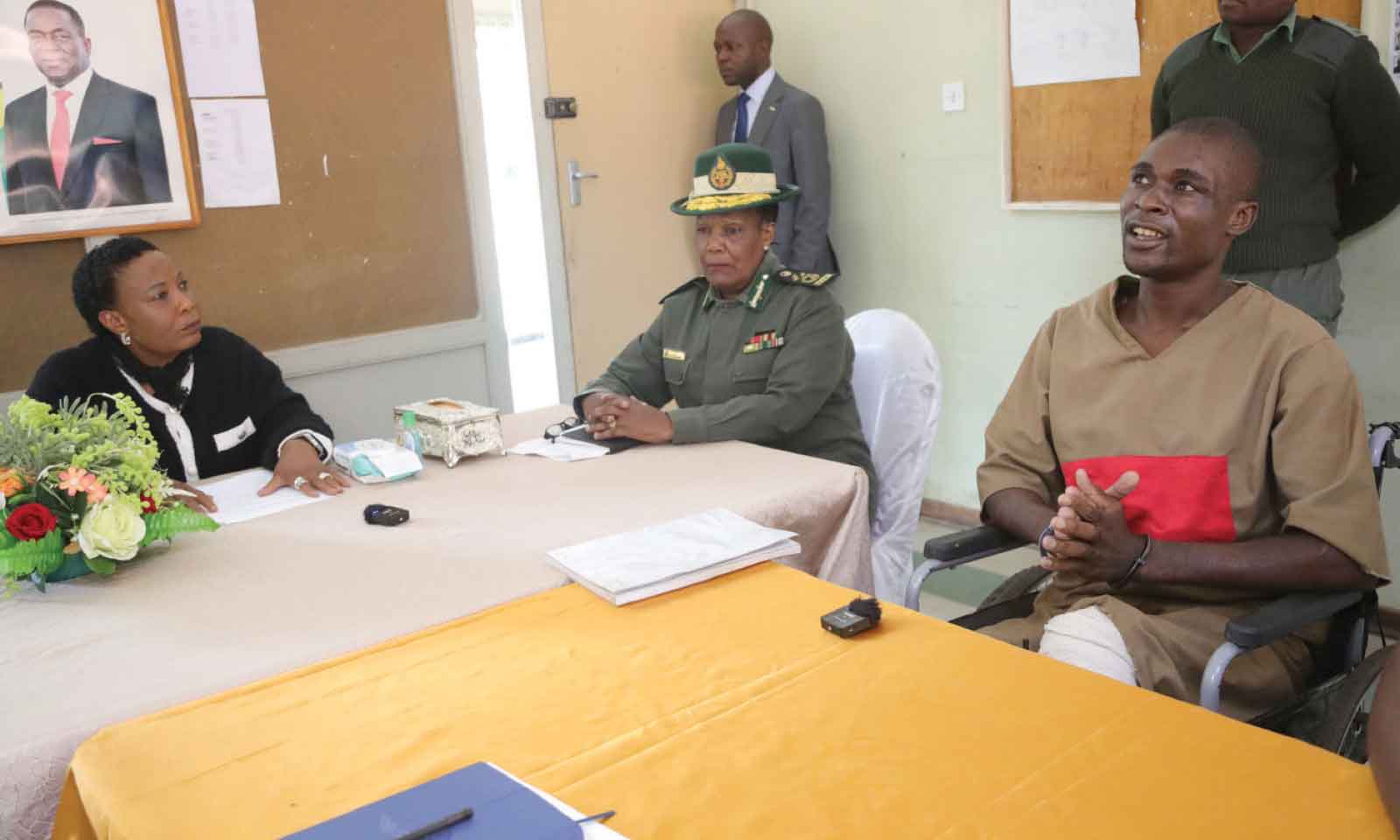
Zimbabwe's First Lady, Dr Auxillia Mnangagwa, has taken the extraordinary step of visiting Anymore Zvitsva — the man suspected of murdering 25 people across Guruve district — inside the walls of Chikurubi Maximum Security Prison in Harare, in a deeply personal effort to understand how one man could inflict such catastrophic suffering on an entire community.
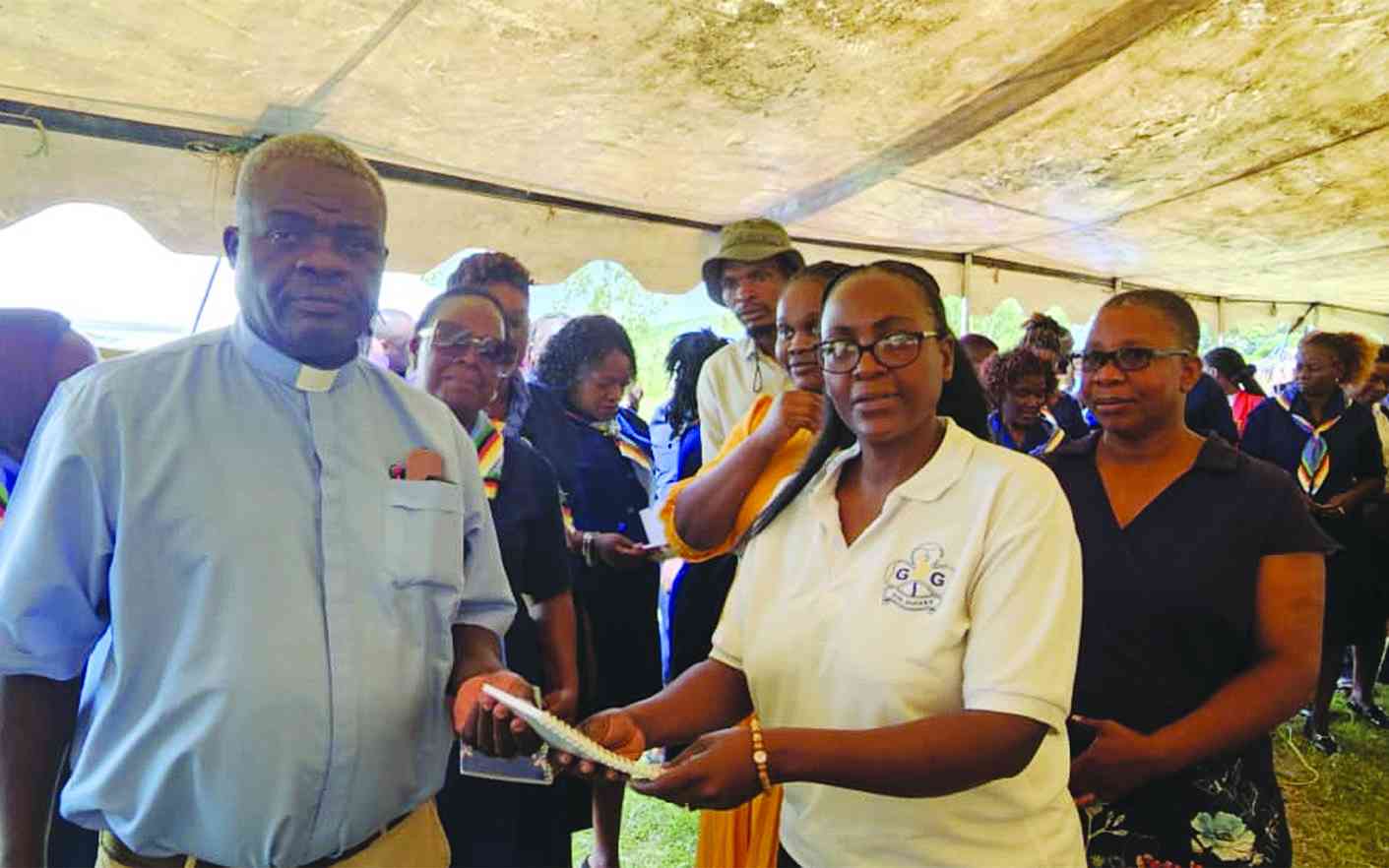
The visit, which marks one of the most unusual interventions by a sitting First Lady in living memory, came weeks after Dr Mnangagwa had already visited bereaved families in Guruve — communities still shattered by killings that left some homesteads permanently abandoned, their occupants unable to return to the places where their loved ones were taken.
"I was troubled in my mind," Dr Mnangagwa said of her decision to request the face-to-face meeting. "I needed to hear from the horse's mouth. I needed to understand if this was a human being."
Seated in a wheelchair, Zvitsva spoke without apparent remorse about the mechanics of murder
Zvitsva, who appeared in a wheelchair during the encounter, spoke at length about the sequence of killings that began in 2024, describing acts of extreme violence — including the mutilation of victims' bodies, the sale of human remains to a miner and a self-styled prophet for ritual purposes, the consumption of human flesh, and the use of human ashes mixed into lotion as part of what he described as fortune-telling practices.
He told the First Lady he had sold body parts to a miner identified as Nathan Churweni, who had promised payment upon returning from Mozambique — payment that never materialised. Blood from one victim was sold to a prophet identified as Junioius Kasinauyo for approximately US$200, with Zvitsva stating he did not know the intended use.
He also claimed to have used human ashes in the construction of a building, driven by a belief — apparently reinforced by dreams — that such acts could generate wealth.
The level of clinical detail in Zvitsva's account visibly disturbed the First Lady and those present in the room.
"My journey of killing people began in 2024" — how the first murder unfolded
Zvitsva recounted that his first killing was not premeditated. He had broken into a home in search of food, stealing approximately 10 kilogrammes of mealie-meal. Returning later that night, convinced the homeowner had cash he had missed, he confronted the woman at her door.
When a struggle broke out and the woman fought back — "powerful like a soldier," Zvitsva told the First Lady — he struck her with an axe. Wounded and determined to retrieve his mobile phone, which he feared would be used as evidence, he pursued her into the bush where she had fled with her child.
After a prolonged struggle in which the woman struck him with a brick, he stabbed her. She died from her injuries.
"That is when I realised I had stabbed someone," Zvitsva said. "That is when my journey of killing people began."
He said he fled home, acknowledging he could have stopped the bleeding but was consumed by fear. That night, the woman appeared in his dreams, delivering a warning in Shona — words that haunted him, he said, from that point forward.
A niece, then her child — the pattern of violence accelerates
The second killing followed shortly after, when Zvitsva encountered his niece, who he believed had identified him as a thief and would report him to authorities. He described strangling her with wire after she retreated to her home.
Her child — estimated to be between three and five years old — was present. Zvitsva said he initially considered sparing the child before what he described as a "killing spirit" overcame him. He murdered the child as well, then concealed the mother's body by removing and selling her remains, burying the child in a shallow grave he dug with a tree log.
Asked by the First Lady how many people he had killed in total, Zvitsva said he could not remember, adding that he had only formally buried three of the victims. The others, he said, were left where they fell.
Months in the bush, walking barefoot, evading capture
As police mounted a major search operation and national media coverage intensified, Zvitsva described spending extended periods hiding in forests, never walking openly on roads or paths, always moving along the edges of tracks or through grass to avoid leaving traceable footprints.
"I would walk like someone trying to catch a wild animal," he said — armed with knives and traditional spears, always watching for movement, always prepared for confrontation.
He described the period as one of psychological deterioration, tormented by the recurring appearance of his victims in dreams, yet continuing to kill.
"According to my own thinking, the evil spirit started after my first killing and never left me," he said.
An appeal for forgiveness — and the question no one can answer
At the close of the encounter, Zvitsva addressed the First Lady, the President, bereaved families, and the nation directly:
"I committed heinous crimes. I killed women, children and men. To all the families I wronged — find it in your hearts to forgive me."
The First Lady then posed a final question: given the nature of his crimes, what punishment did he believe was appropriate?
Zvitsva declined to answer. "It is up to the State, which knows," he said.
Dr Mnangagwa did not offer a verdict of her own. She left the prison with the questions that had brought her there — whether this was truly a human being, and what could drive a person to such acts — still unanswered, as they perhaps must remain.
The wounds in Guruve have not healed
For the communities of Guruve, Zvitsva's apology — however sincerely delivered — offers little comfort. Families have buried their dead, but the psychological wounds run deeper than any burial can address. Some homes remain empty. Some children sleep in fear. Some communities that once gathered freely at night no longer do.
The legal process that will determine Zvitsva's fate is now underway within the justice system. Whatever sentence is handed down, it cannot restore what was taken from 25 families in the hills and villages of Guruve.
Zimbabwe has confronted much in its history. The case of Anymore Zvitsva — the scale of the violence, the nature of the acts, the apparent ordinariness of the man who committed them — has unsettled the nation in a way that legal proceedings alone will never fully resolve.
The First Lady returned from Chikurubi having seen what she came to see. Whether seeing it helped her understand it is another question entirely.
Additional reporting: Based on Herald/Zimpapers coverage by Blessings Chidakwa, Senior Reporter. The Granite Post has independently verified the facts of this report.