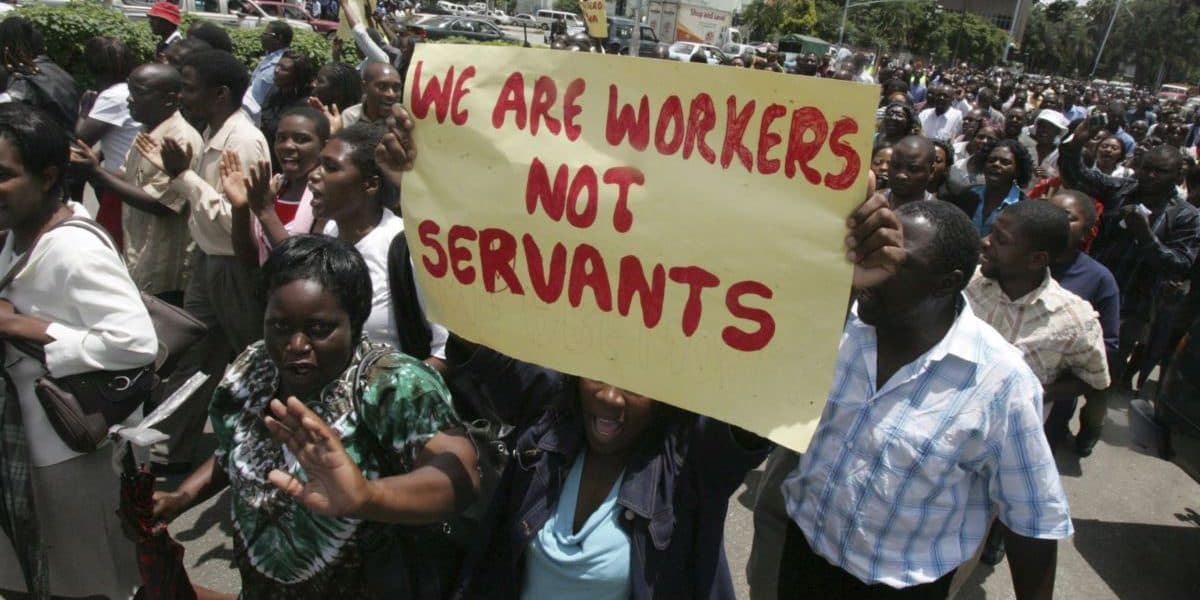
HARARE - Zimbabwean lawmakers have contradicted the government's own assessment of worker welfare, warning that most of the country's employed population cannot meet basic survival costs on their current wages.
The parliamentary rebuke came just days after Finance Deputy Minister Kudakwashe Mnangagwa claimed in the House that the lowest-paid civil servants now earn above the Poverty Datum Line and that government salaries have become competitive.
Legislators pushed back, saying the reality on the ground does not match that picture. Rising fuel prices, triggered partly by tensions in the Middle East, have pushed up commuter fares and the cost of basic goods, eroding whatever gains have come from salary adjustments.
The annual inflation rate rose slightly to 4.4% in March 2026, according to recent data, driven largely by fuel price increases. While that figure is significantly lower than Zimbabwe's historical inflation peaks, workers say monthly budgets are being stretched regardless.
The nurses strike threat underscores the tension. The Zimbabwe Nurses Association has cited transport costs as a direct grievance, noting that some members have been walking to work because bus fares have consumed a disproportionate share of their income.
Teachers, through the Progressive Teachers Union of Zimbabwe, have also rejected the job evaluation outcomes announced by the Public Service Commission, accusing Finance Minister Mthuli Ncube of dishonesty over government's stated commitment to improve their welfare.
The gap between official statistics and lived experience has long been a flashpoint in Zimbabwe. Economists and civil society groups continue to argue that meaningful wage policy must be anchored to actual household expenditure baskets, not headline inflation figures alone.