
Fake Job Offers on WhatsApp Leave Zimbabwean Jobseekers at Risk
 By Rebecca Zimera3 min read
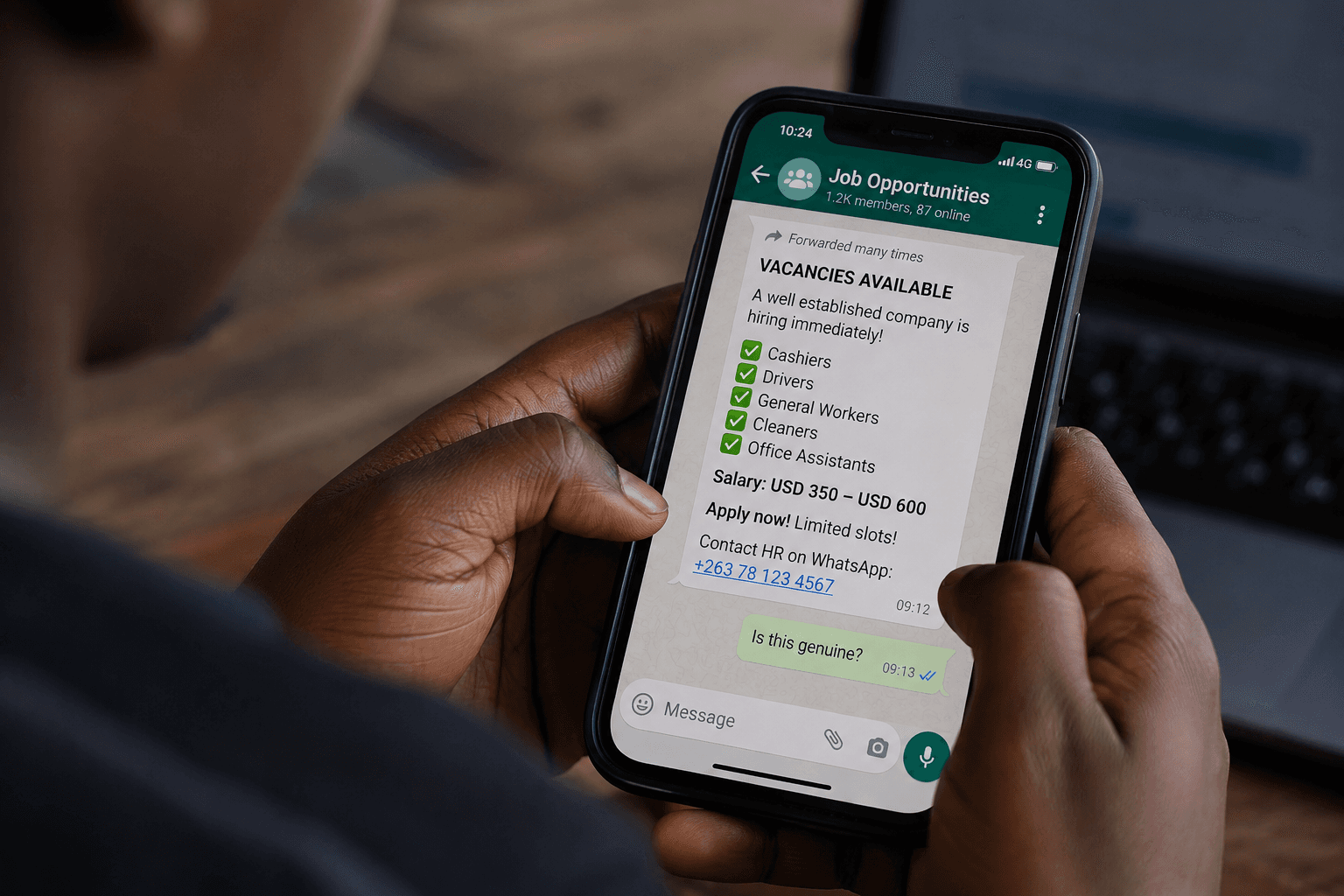
ZIMBABWE - job advertisement shared in a WhatsApp group can reach hundreds of unemployed Zimbabweans within minutes. It may carry a familiar company logo, promise an attractive salary and provide a telephone number for applications.
For someone who has spent months searching for work, the opportunity can be difficult to ignore.
But police reports and warnings from employers have shown that some advertisements are designed to steal money from jobseekers rather than recruit workers.
The scams often begin with an ordinary-looking vacancy. Applicants are then asked to pay registration fees, medical examination charges or money supposedly needed to secure an interview.
By the time they discover that the position does not exist, the person who collected the payment may have disappeared.
Fraudulent recruitment can cost unemployed Zimbabweans money, expose personal information and put applicants at risk when travelling to unverified interview locations.
Jobseekers Targeted Through WhatsApp Groups
In July 2026, Zimbabwean police reported the arrest of two women suspected of using a WhatsApp group called "Job Opportunities" to defraud people seeking employment.
According to police accounts reported at the time, the suspects advertised positions including cashiers, housekeepers and merchandisers. More than 100 people were allegedly affected, with some reportedly paying US$100 or more.
The allegations remained subject to investigation, and the arrests did not establish guilt.
The risks are not limited to money.
In September, police reported that a 27-year-old woman from Gokwe had allegedly been robbed and sexually assaulted after travelling to Harare in response to a WhatsApp job offer.
The reported incident raised concerns about applicants being directed to unfamiliar locations by people whose identities have not been established.
Government institutions have also faced attempts to misuse their names in recruitment advertisements.
In April 2026, the Zimbabwe Tourism Authority publicly disowned an online hospitality recruitment notice carrying its branding. The authority said the advertisement was unauthorised and warned the public against relying on it.
A Company Logo Is Not Proof of a Vacancy
Fraudulent recruitment notices can look convincing. Some include official-looking letterheads, salary figures, closing dates and addresses copied from legitimate organisations.
Others create urgency by telling applicants that only a few positions remain.
A genuine-looking advert should therefore be checked against information published by the employer itself.
Jobseekers can contact a company's human resources department using telephone numbers obtained independently from its official website or established offices.
Where an advertisement claims to come from a government institution, applicants should check the relevant department's official recruitment notices.
Requests for money deserve particular scrutiny. A person who promises guaranteed employment in exchange for a payment to a personal mobile-money account should not be trusted without independent verification.
Applicants should also avoid sending banking passwords, EcoCash PINs or one-time verification codes to anyone claiming to be a recruiter.
Personal safety matters just as much. An interview location should be confirmed through the employer before travelling, particularly when a stranger unexpectedly changes the venue.
Reporting Suspicious Recruitment Offers
People who suspect they have been defrauded should preserve the advertisement, WhatsApp messages, telephone numbers and payment records.
The information may assist police investigations and help a bank or mobile-money provider examine whether a transaction can be recovered.
Job group administrators also have a responsibility to question suspicious vacancies before forwarding them to large audiences.
WhatsApp remains a useful way for genuine employers and jobseekers to exchange information. The problem is the ease with which an unverified advertisement can acquire credibility simply because it has been shared repeatedly.
For unemployed Zimbabweans, losing money to a nonexistent vacancy can deepen an already difficult financial situation.
A job offer should be an opportunity to earn an income, not a reason to surrender money or place personal safety in the hands of an unknown caller.
How we reported this
The Granite Post Zimbabwe verifies documents, interviews sources and checks official records before publication. Our editorial standards explain what we require before a story runs.
Read our editorial standardsAbout the author
Rebecca Zimera is Senior Business and Courts Correspondent at The Granite Post. She reports on money and property in Zimbabwe, covering economic policy, household finances, local government spending and the court cases that decide who owns what
View author profileLatest Updates



Business & Economy
Harare to open COMESA business programme ahead of Thursday summit
Related Articles





Premium
View all Premium →
ZiG Inflation Falls to 2.9% but Bank Loans Still Cost Over 40%
Annual ZiG inflation dropped to 2.9% in August, the lowest since independence, 18 April 1980. But the central bank says some banks have not cut lending rates since June, leaving borrowers paying more than 40% while prices barely move.


Support independent journalism
Support our journalismSupport The Granite Post Zimbabwe
Your subscription helps fund investigations, public-interest reporting and deeper Zimbabwe coverage.





Comments
Join the conversation
Share your view.
No comments yet. Be the first.