
Oil Tanker Attacks in Strait of Hormuz Raise Fears Over Regional Energy Security
 By Prosper Makunike4 min read
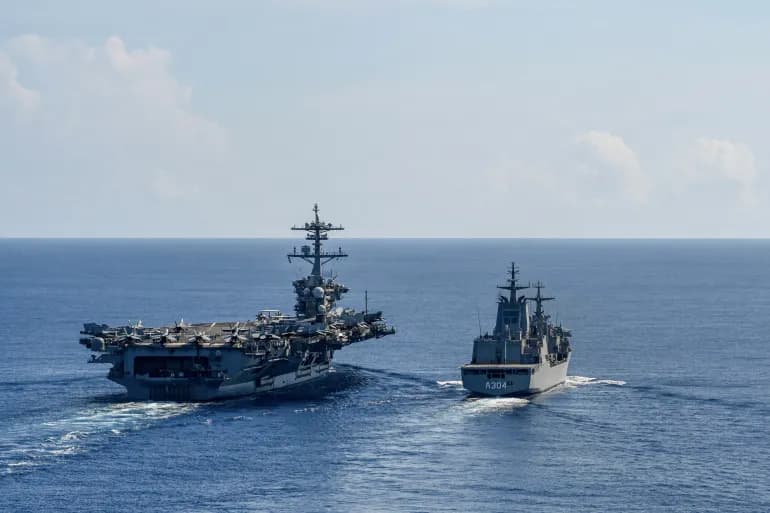
The incidents occurred as tensions between the United States and Iran continued, despite diplomatic efforts aimed at ending their conflict and restoring normal shipping through the strategically important waterway.
Iran's Islamic Revolutionary Guard Corps (IRGC) Navy announced on Monday that two oil tankers had struck naval mines and caught fire while attempting to navigate the southern section of the Strait of Hormuz.
The Iranian military said the vessels were using a route that Tehran considers unauthorised.
Separately, Iran's regular navy reported that another tanker had caught fire and become immobilised after hitting a mine in restricted waters east of the strait.
However, the Iranian authorities did not disclose the identities of the vessels, and the claims could not be independently confirmed.
Maritime Agency Reports Two Tanker Attacks
The United Kingdom Maritime Trade Operations (UKMTO), which monitors maritime security incidents, also reported two separate attacks on tankers in the Strait of Hormuz on Monday.
In the latest incident, a tanker was disabled after an attack approximately seven nautical miles, or 13 kilometres, north of Khasab in Oman. An engine-room fire was reported following the incident.
Earlier, UKMTO had received information that another tanker was hit by an unidentified projectile while sailing out of the strait. The impact also caused a fire in the vessel's engine room.
No casualties were reported in either of the incidents.
It was not immediately established whether the attacks documented by the British maritime monitoring agency were connected to the mine strikes reported by Iranian naval forces.
The latest incidents add to a growing number of security threats facing commercial shipping in the region.
According to the United Nations' International Maritime Organization, 136 security incidents involving vessels in the Strait of Hormuz and the wider Middle East were recorded between March 1 and November 11. Thirty-five of those incidents occurred in October alone.
Drone Alert at Major Iraqi Gas Facility
Meanwhile, security concerns extended beyond maritime transport after warning sirens sounded at Iraq's Khor Mor gas field in the semi-autonomous Kurdistan region.
Reuters, citing two security sources, reported that a drone flew over the facility on Monday, triggering the alert.
There were no immediate reports that the drone had struck the gas field or caused any damage.
However, operations at Khor Mor had already been suspended the previous week following a suspected drone attack that caused a fire at the facility.
Dana Gas, the United Arab Emirates-based company involved in operating the field, said the disruption had affected approximately 2.8 gigawatts of electricity generation.
Khor Mor is an important source of natural gas used to generate electricity across the Kurdistan region. Any prolonged interruption to production therefore has significant implications for local power supplies.
The facility has experienced repeated attacks in the past, with Iraqi Kurdish officials blaming Iranian-backed armed groups for some of the incidents.
No organisation had been identified as responsible for Monday's drone overflight.
US Expands Military Presence in the Region
The developments came as Washington continued reinforcing its military presence in the Middle East.
The United States aircraft carrier USS Theodore Roosevelt arrived in the region on Monday, according to an American official who confirmed the deployment to Al Jazeera.
Its arrival brought the number of US aircraft carriers operating within the US Central Command area to three.
The military deployment comes amid continuing tensions between Washington and Tehran, with efforts to secure an end to the war and reopen the Strait of Hormuz showing little progress.
Growing Concerns Over Global Energy Supplies
The Strait of Hormuz is one of the world's most important energy shipping routes, making attacks on vessels operating in the area a major concern for international trade.
Continued disruptions could affect the movement of oil and other energy supplies, while attacks on facilities such as Khor Mor threaten electricity generation and regional energy security.
With commercial vessels facing mounting security risks and diplomatic negotiations remaining stalled, uncertainty continues over when shipping through the strait and energy operations across the region will return to normal.
Sources & reporting
The Granite Post Zimbabwe verifies documents, interviews sources and checks official records before publication. Our editorial standards explain what we require before a story runs.
Read our editorial standards
Related Articles


Join the discussion
Share your view.
No comments yet. Be the first.