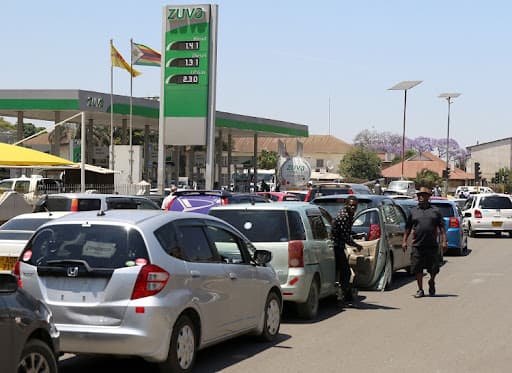
Zimbabwe’s Zimbabwe fuel taxes are being lined up for a temporary cut after Cabinet moved to blunt pump-price pressure that is already spilling into transport fares — even as ministers insist the country has enough fuel to avoid shortages.
The plan, approved in Harare on Tuesday, targets “selected and time-bound” levies on fuel and reopens a bigger policy lever: raising ethanol blending in petrol from E5 to E20, a shift government says could reduce local pump prices.
Cabinet approves a cut but won’t name which taxes, or when
Information, Publicity and Broadcasting Services Minister Dr Zhemu Soda said Cabinet had approved a review of fuel taxes after assessing how the Middle East conflict is affecting pricing of basic commodities between January and March 2026.
“Cabinet considered and approved a review of selected and time-bound fuel taxes in order to contain inflationary pressures and safeguard consumer welfare.” Dr Zhemu Soda, Minister of Information, Publicity and Broadcasting Services (as quoted by The Herald)
What Cabinet did not provide is the detail that determines whether motorists feel any relief: which levies will be reduced, by how much, and on what date the new pump prices will begin.
That gap matters because fuel pricing is an immediate pass-through cost in Zimbabwe’s transport sector — and once fares move, prices of groceries and services tend to follow.
The contradiction: “no supply shocks” yet emergency routes are activated
Government’s public line is stability. Industry and Commerce Minister Mangaliso Ndlovu said Zimbabwe has “adequate stocks” held inland and in Beira, Mozambique.
“We have adequate stocks both inland and in Beira that will see us not experiencing any supply shocks.” Mangaliso Ndlovu, Minister of Industry and Commerce (as quoted by The Herald)
But the policy actions signal stress in the supply chain. Cabinet approved diesel imports by road “with immediate effect,” alongside existing pipeline and rail systems an escalation usually reserved for flexibility when risk is rising.
Put simply: ministers are messaging certainty while simultaneously widening emergency options. If there is no risk of disruption, the public deserves a clear explanation for why urgent route changes are necessary.
What E5 to E20 actually means and the questions government still hasn’t answered
E5 means petrol blended with 5% ethanol. E20 raises that to 20%, increasing the share of locally produced ethanol in the fuel mix.
Officials pitched E20 as a price lever, and local ethanol producers have previously estimated savings of about US$0.18 per litre if the market moved from E5 to E20. That figure, however, depends on supply capacity, blending logistics, and how savings are transmitted to the pump price.
Before any switch, two practical questions need public answers:
- whether local ethanol supply can meet national demand consistently without gaps, and
- what guidance will be issued on vehicle compatibility, warranties, and quality controls.
Officials claim intervention kept diesel below $2.20 but the timeline is still missing
Government said that without intervention, diesel would have reached US$2.20 per litre instead of US$2.05, and petrol would have exceeded US$2.17 per litre. It also framed diesel pricing as a deliberate buffer for mining, agriculture, haulage, and passenger transport.
That positioning is also an admission: the state is already managing the pump price through policy choices. The unanswered question now is whether the promised Zimbabwe fuel taxes cut will be large enough — and fast enough — to prevent transport operators from locking in higher fares before any relief arrives.
The next “in due course” announcement will decide whether this is a real inflation brake, or just a policy headline that arrives after prices have already moved.
Additional reporting sourced from The Herald. The Granite Post has independently verified key details.