
Bulawayo Runs Out of State Land as Government Pushes for High-Rise Developments
 By Prosper Makunike3 min read
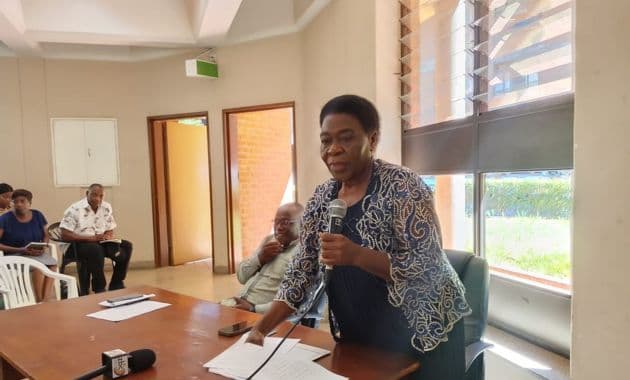
The shortage has prompted calls for a major shift in urban planning, with authorities advocating for the construction of multi-storey residential buildings and office blocks to maximise the use of existing land.
Minister of State for Provincial Affairs and Devolution for Bulawayo Metropolitan Province, Judith Ncube, highlighted the challenge during the Bulawayo Provincial Development Committee's final quarterly meeting of the year, held at Mhlahlandlela Government Complex.
Ncube said the limited availability of State land was making it increasingly difficult to address accommodation needs and support further development across the city.
She suggested that some existing government housing properties could be redeveloped into taller residential structures to accommodate more families on the same pieces of land.
Using the Mabuthweni Government housing complex as an example, she explained that replacing two existing houses with a two-storey building could increase the number of families accommodated within the same space.
According to Ncube, adopting this approach would help reduce the pressure to identify additional land for residential development while improving the use of existing urban space.
She also revealed that central and local government representatives had previously travelled to Egypt on a study visit to examine its high-rise construction projects. The knowledge gained from the visit is expected to contribute to discussions on how Bulawayo can address its land constraints.
Ncube called for a thorough assessment of the city's circumstances and the development of practical solutions that would improve access to accommodation.
Her comments come as Government intensifies efforts to change Zimbabwe's approach to urban development, with greater emphasis being placed on vertical construction rather than continued expansion into surrounding areas.
Speaking at the Zimbabwe Regional and Urban Planning Annual Conference in Bulawayo the previous week, Local Government and Public Works Minister Daniel Garwe said authorities would reject development plans that failed to reserve at least 40 percent of designated development land for multi-storey buildings.
Garwe warned that uncontrolled urban expansion was consuming productive agricultural land, potentially threatening the country's long-term food production capacity.
He argued that Zimbabwe and other countries in the region needed to recognise their geographical limitations and adopt more efficient settlement planning methods.
The minister said continued horizontal expansion could eventually leave the region increasingly dependent on imported food if agricultural land was not adequately protected.
He pointed to the National Human Settlements Policy, which requires 40 percent of land earmarked for development to be allocated to flats.
Garwe made it clear that local authorities and developers would be expected to comply with the requirement, warning that plans that failed to include the designated proportion for multi-storey housing would not receive approval.
He also called for the same approach to be extended to commercial developments, particularly shopping centres and malls, which he said should increasingly be constructed vertically rather than occupying large areas of land.
The proposed shift represents a significant change in Zimbabwe's urban planning approach, as authorities seek to address housing shortages, manage population growth and preserve land needed for agricultural production.
Source: The Herald
Sources & reporting
The Granite Post Zimbabwe verifies documents, interviews sources and checks official records before publication. Our editorial standards explain what we require before a story runs.
Read our editorial standards
Related Articles

Join the discussion
Share your view.
No comments yet. Be the first.