
Chiwenga Warns ZANU-PF Against Repeating Mistakes of the Past
 By Rebecca Zimera4 min read
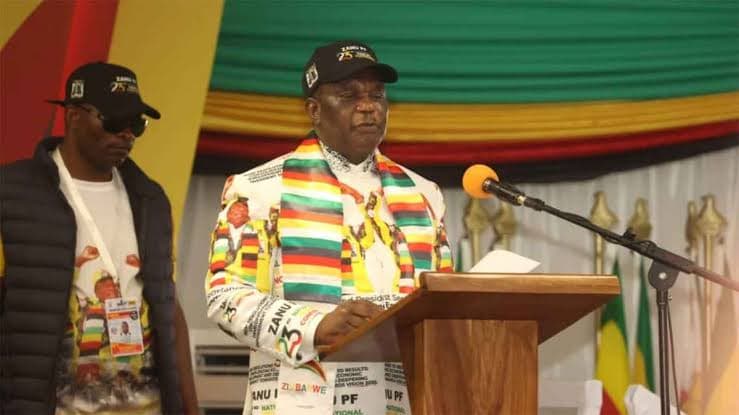
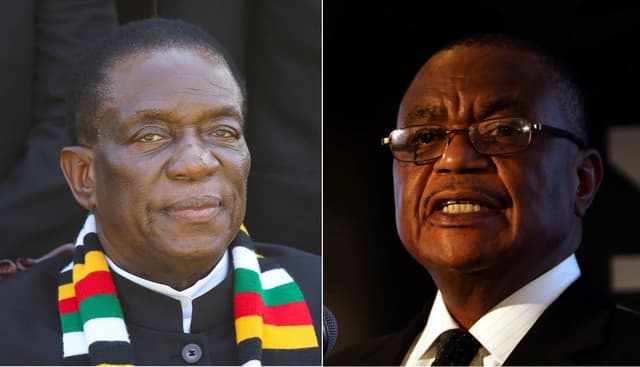
Vice President Constantino Chiwenga has challenged ZANU-PF to confront its past and examine whether the ruling party is repeating the mistakes that brought about the Second Republic, delivering an unusually pointed message at a national conference attended by President Emmerson Mnangagwa.
Chiwenga made the remarks on Friday, October 16, while introducing Mnangagwa at the party's 23rd National People's Conference at Chinhoyi University of Technology.
What began as a ceremonial introduction became an appeal for political accountability, internal democracy and a reassessment of the party's conduct.
Speaking partly in Shona, Chiwenga questioned why the Second Republic had been established in 2017 and whether the problems it was intended to correct were resurfacing.
He then called for a "brutal and honest self-appraisal", urging delegates to examine whether the party's decisions genuinely reflected the wishes of ordinary members.
Chiwenga's reference to the 2017 political transition comes as Zimbabwe navigates constitutional changes and debate over its political future. The speech has brought renewed attention to questions of party accountability, collective leadership and the promises associated with the Second Republic.
The remarks carried particular significance because Chiwenga played a central role in the military intervention that ended Robert Mugabe's 37-year rule in November 2017 and paved the way for Mnangagwa's presidency.
A warning rooted in the events of 2017
Chiwenga's reference to the Second Republic placed the conference's discussions against the history of the political transition that brought the current administration to power.
That transition was presented by its supporters as an opportunity to address governance failures, restore confidence in public institutions and pursue economic recovery.
Nine years later, Chiwenga was asking whether those commitments remained central to the ruling party's direction.
He questioned whether conference resolutions originated from grassroots structures and whether the concerns of ordinary Zimbabweans were being adequately represented.
He also argued that the party should judge its resolutions by their effect on livelihoods rather than by declarations made at political gatherings.
In one of the address's most significant passages, Chiwenga insisted that political change should emerge through established party structures and constitutional processes, rather than being dictated by individuals.
His emphasis on collective leadership and accountability came amid continuing debate over Zimbabwe's political future and the implications of constitutional changes extending the country's electoral cycle.
The vice president did not directly accuse Mnangagwa of wrongdoing, demand his resignation or explicitly oppose the constitutional amendment.
That distinction is important. Although his remarks have attracted political interpretations, the speech itself was framed around party discipline, accountability and the need to deliver on promises made to Zimbabweans.
Mnangagwa stresses unity and economic progress
Mnangagwa subsequently addressed delegates with a message centred on economic development, party unity and the implementation of conference resolutions.
He cited improvements in economic performance and presented his administration's development programme as evidence that the Second Republic was delivering results.
The president also warned against individualistic conduct within the party, using the Shona expression "mazvake-mazvake" to emphasise the importance of collective action.
Significantly, Chiwenga had used the same expression in his own address while cautioning against personal ambition and conduct that undermines collective interests.
The similarity does not establish that either leader was responding to the other. Both remarks were delivered in the context of a conference whose stated theme focused on translating party resolutions into measurable development outcomes.
Mnangagwa's speech emphasised continuity and the government's economic achievements, while Chiwenga's address placed greater weight on internal reflection and the responsibilities of political leadership.
Remarks draw criticism from political figures
The political reaction was swift.
ZANU-PF spokesperson Christopher Mutsvangwa criticised Chiwenga's address, accusing the vice president of using the opportunity to introduce Mnangagwa to advance personal political ambitions.
His reported comments suggested that the speech had departed from the purpose of the occasion and introduced unnecessary political confrontation.
Former ZANU-PF Mashonaland West provincial chairman Temba Mliswa also condemned the remarks, describing them as "corrosive" and inconsistent with the message he believed the conference should have conveyed.
Mliswa argued that the gathering should have concentrated on government programmes, economic performance and the party's development agenda rather than revisiting historical grievances.
He went further by questioning whether Chiwenga should remain in his position if he fundamentally disagreed with the prevailing political direction.
The criticisms underline how differently the vice president's remarks have been interpreted. While Chiwenga presented his message as a call for accountability and collective responsibility, his critics characterised it as politically divisive.
There was no verified public response from Chiwenga to those criticisms at the time of writing.
Beyond the immediate exchanges, the speech raises a question with implications for ZANU-PF's future: whether the principles invoked to justify the political transition of 2017 remain a shared foundation for the party's leadership.
Chiwenga did not answer that question on behalf of his colleagues. Instead, he placed it before them at one of the party's most important annual gatherings.
How we reported this
The Granite Post Zimbabwe verifies documents, interviews sources and checks official records before publication. Our editorial standards explain what we require before a story runs.
Read our editorial standardsAbout the author
Rebecca Zimera is Senior Business and Courts Correspondent at The Granite Post. She reports on money and property in Zimbabwe, covering economic policy, household finances, local government spending and the court cases that decide who owns what
View author profileLatest Updates



Business & Economy
Harare to open COMESA business programme ahead of Thursday summit
Related Articles
Premium
View all Premium →
ZiG Inflation Falls to 2.9% but Bank Loans Still Cost Over 40%
Annual ZiG inflation dropped to 2.9% in August, the lowest since independence, 18 April 1980. But the central bank says some banks have not cut lending rates since June, leaving borrowers paying more than 40% while prices barely move.

Support independent journalism
Support our journalismSupport The Granite Post Zimbabwe
Your subscription helps fund investigations, public-interest reporting and deeper Zimbabwe coverage.



Comments
Join the conversation
Share your view.
No comments yet. Be the first.