
Zimbabwe Plans to Expand ZiG Investment Instruments and Revive Domestic Bond Market
 By Prosper Makunike4 min read
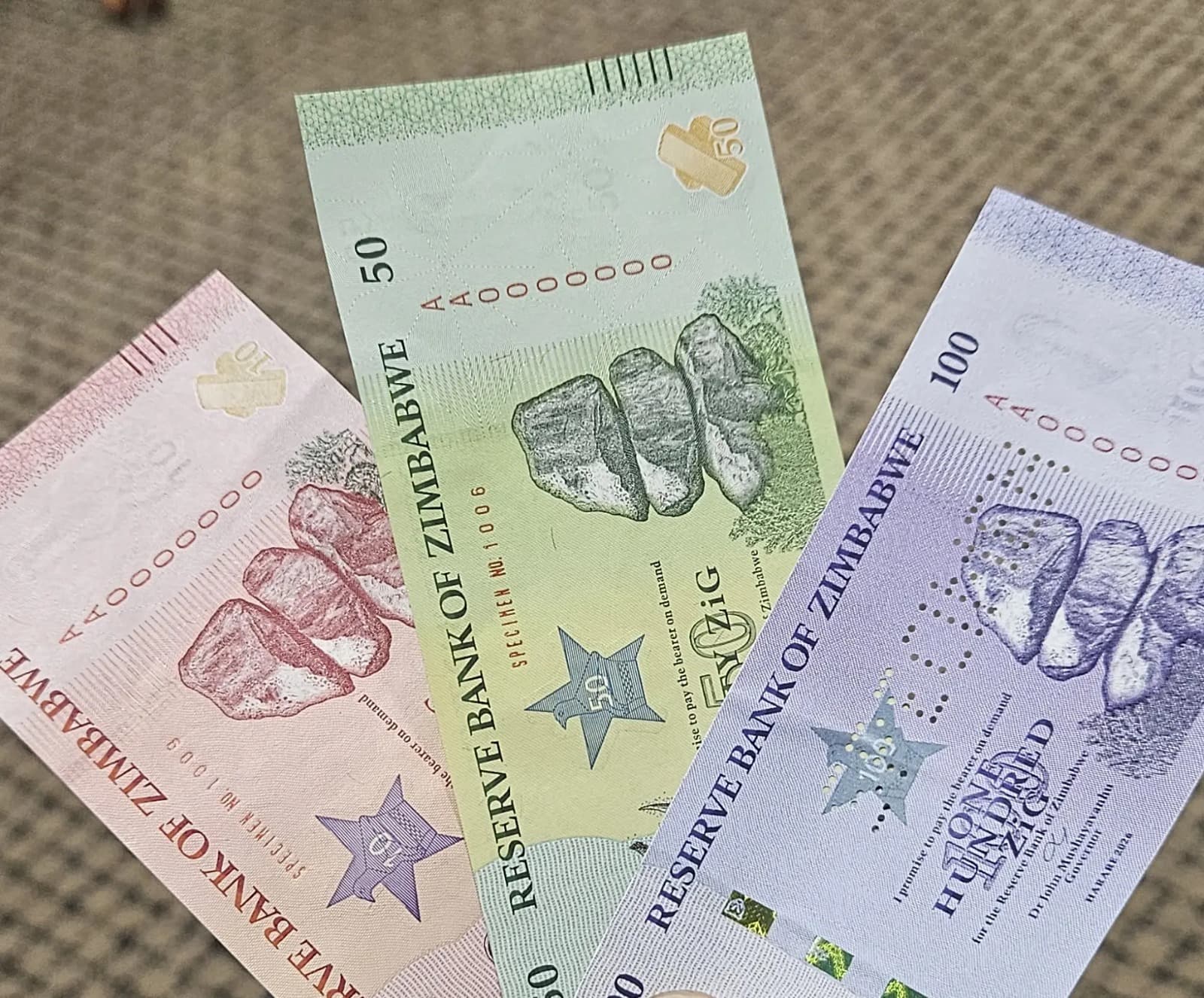
Reserve Bank of Zimbabwe Governor John Mushayavanhu says the country is now looking beyond the use of ZiG for everyday transactions and intends to develop investment instruments that encourage people and institutions to hold the local currency over longer periods.
Speaking in an interview in Johannesburg on Thursday, Mushayavanhu said the authorities wanted to strengthen confidence in the currency by creating opportunities for investors to earn returns on ZiG-denominated savings.
“The authorities intend to make the ZiG a store of value, as opposed to just a transactional currency,” he said.
He added that the next step was to establish a short-term yield curve for the local currency.
Central Bank Plans Longer-Term Investment Instruments
The central bank has already introduced ZiG-denominated term deposit instruments with maturities of 30 and 90 days.
According to the report, the instruments offer annual yields of 8 percent and 11 percent respectively, and were fully subscribed during the auction process. The securities were priced on September 9, based on information published on the central bank's website.
Mushayavanhu said the monetary authorities now intend to introduce longer investment periods to create a broader range of returns for investors.
“We have established the short-term yield which you would get, but what is now required is to elongate that curve,” he said.
He indicated that government securities, including Treasury bonds, would eventually be introduced to provide additional investment options and extend the yield curve.
“You are going to be seeing government instruments, Treasury bonds, coming into the market to further elongate the yield curve,” he said.
A yield curve shows the returns investors can expect from financial instruments with different maturity periods. Developing one is expected to help establish clearer pricing for borrowing and investment in the local currency.
Zimbabwe Studies Regional Bond Markets
Zimbabwe is also examining how other countries structure their domestic currency debt markets as it prepares to expand its own system.
Mushayavanhu said the central bank was studying the experiences of regional neighbours and the country's trading partners to determine how Zimbabwe's proposed market could be developed.
South Africa, Namibia and Zambia were identified as countries with established domestic debt markets whose experiences could provide useful comparisons.
The initiative comes after years of currency instability, which weakened confidence in local-currency savings and investment instruments.
ZiG was introduced in April 2024 to replace the Zimbabwean dollar, making it the country's sixth attempt to establish a functioning domestic currency.
ZiG Exchange Rate and Foreign Reserves
Despite the reported improvements in inflation and currency stability, the ZiG has continued to face pressure against the United States dollar.
The currency has lost almost 3 percent of its value against the dollar in 2026, according to the report.
Mushayavanhu said the Reserve Bank had spent US$1.35 billion during the first nine months of the year intervening in the foreign-exchange market. He suggested that the interventions may have prevented a more substantial decline in the local currency.
The governor also disclosed that the country's foreign currency reserves had increased to more than US$2 billion.
He said this amount would be sufficient to buy back all ZiG32 billion currently in circulation, implying an exchange rate of approximately ZiG18 to the US dollar.
However, the currency was trading at ZiG26.43 per US dollar on Thursday.
Mushayavanhu argued that the prevailing exchange rate undervalued the ZiG when compared with the level implied by the country's reserves.
“When I look at the exchange rate which is between 25 and 27 per dollar, I'm actually seeing an undervalued ZiG,” he said.
He added that the difference between the implied rate of ZiG18 and the prevailing market rate represented a premium that, in his view, should not exist.
“The difference between 18 and 25 or 26 or 27 per dollar to me is a premium that should not be there,” he said.
Confidence Remains Central to Currency Strategy
The planned expansion of ZiG investment instruments forms part of wider efforts to rebuild confidence in Zimbabwe's financial system after prolonged currency instability.
By introducing longer-term deposits and Treasury bonds, authorities hope to create more opportunities for saving and investment in the domestic currency.
However, the success of the proposed bond market will depend on sustained confidence in the ZiG, the credibility of monetary policy and investors' willingness to commit funds for longer periods.
The government and central bank are therefore seeking to transform the ZiG from a currency primarily used for transactions into one that can also support domestic savings, borrowing and investment.
Sources & reporting
The Granite Post Zimbabwe verifies documents, interviews sources and checks official records before publication. Our editorial standards explain what we require before a story runs.
Read our editorial standards
Related Articles


Join the discussion
Share your view.
No comments yet. Be the first.