
Zimbabwe Miners Pledge US$1.2 Billion for Local Mineral Processing in 2027
 By Prosper Makunike5 min read
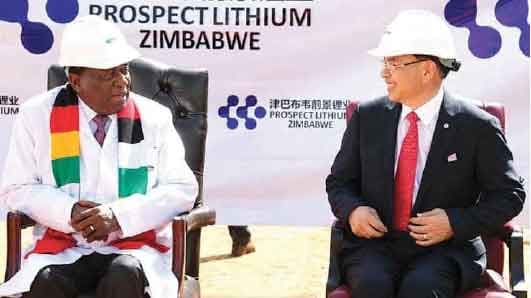
The investment comes as the Government intensifies efforts to ensure that minerals extracted in the country undergo more processing locally before being exported, a strategy aimed at increasing export earnings, creating employment and retaining greater economic value within Zimbabwe.
President Emmerson Mnangagwa has repeatedly emphasised the need to end the exportation of minerals in their raw form, arguing that valuable materials are being shipped out of the country without sufficient local processing.
His administration has introduced measures across the mining industry, including restrictions on raw lithium exports and a requirement that exporters move towards exporting lithium sulphate from January 2027.
The President has urged mining companies and other stakeholders to adjust their operations to support the national beneficiation programme.
US$1.2 billion earmarked for processing facilities
Details contained in the Chamber of Mines of Zimbabwe's annual State of the Mining Industry Report indicate that the mining sector requires more than US$1.9 billion to finance planned projects in 2027.
Of this amount, approximately US$1.2 billion is expected to go towards developing and expanding mineral beneficiation infrastructure, with lithium processing projects accounting for a substantial portion.
The report was presented during a mining industry seminar in Harare.
The investment plans reflect improved confidence among mining companies, with the Mining Business Confidence Index reportedly increasing to three times its previous year's level.
Most of the companies surveyed indicated that they were either expanding existing operations or establishing new processing facilities in accordance with Government beneficiation agreements.
“Analysis of capital requirements data shows that the mining industry requires more than US$1.9 billion to implement their projects in 2027, with the bulk of it earmarked for lithium beneficiation projects,” the report states.
Planned investments include crushing and screening equipment, modular processing facilities, lithium plants and infrastructure for recovering tin and tantalum.
Other projects will involve oxygen production plants, leaching tanks, gravity processing circuits and improvements to existing mining facilities.
In addition, approximately US$120 million has been set aside for energy-related investments, including solar installations, thermal power generation and electricity supply stabilisation projects.
Gold producers target higher output
The survey also indicates that around three-quarters of the mining companies consulted intend to increase production during 2027.
Large-scale gold producers are expected to lead the expansion, with planned investments of approximately US$400 million aimed at raising national gold production from 55 tonnes to 59 tonnes.
The projected increase is expected to strengthen the contribution of gold to the country's mineral export earnings.
Government says beneficiation will cover all minerals
Speaking at the report's launch, Mines and Mining Development Minister Dr Polite Kambamura expressed optimism about the mining industry's prospects for 2027.
He attributed the positive outlook to improved economic stability, stronger investor confidence, increasing employment and several projects currently at different stages of development.
“We are happy with the positive prospects for 2027. The year is going to be a good year for us, looking at the mining sector, the business confidence index, the level of stability, the appetite to invest from the industry, the employment numbers that are coming, and new projects that are currently at different stages of development,” Kambamura said.
The Minister also credited the Government's beneficiation policies for contributing to improved mineral revenues during the current year.
He predicted that foreign currency earnings from mining would increase further in 2027 as more companies invest in local processing facilities.
Kambamura emphasised that the national beneficiation programme was not limited to lithium but covered every mineral category.
“We are not looking at the lithium sub-sector only, as many may think, but we have developed a beneficiation strategy for all minerals, mineral by mineral. So come next year, we will see another flow of minerals that will be beneficiated to different levels, building up or construction of beneficiation facilities,” he said.
He added that processing minerals within the country would help protect local employment, retain control over natural resources and increase export earnings through domestic industries.
Mining remains Zimbabwe's major foreign currency earner
Reserve Bank of Zimbabwe Governor Dr John Mushayavanhu highlighted the importance of the mining industry to the country's economy, particularly its contribution to foreign currency generation.
He said mining remained Zimbabwe's largest source of foreign exchange and was also supporting efforts to build national foreign currency reserves through mineral royalties.
“The mining sector is very important in our economy; it is the major earner of foreign currency and, as you may be aware, we are building foreign currency reserves from the royalties we are getting from the mining sector,” Mushayavanhu said.
He added that the country was currently receiving sufficient foreign currency from mining activities.
High electricity costs remain a major concern
Despite the positive investment outlook, the Chamber of Mines report identified high operating expenses as a major challenge affecting the competitiveness of local producers.
Electricity prices were singled out as the biggest threat to mining operations.
According to the survey, Zimbabwean mining companies are paying approximately US14.21 cents per kilowatt-hour, compared with a regional average of US7.80 cents.
The difference places local producers at a cost disadvantage, particularly businesses that depend heavily on electricity for processing and extraction.
Concerns were also raised about possible electricity shortages associated with El Niño-related weather conditions and reduced hydroelectric generation.
Responding to the concerns, Zimbabwe Electricity Transmission and Distribution Company (ZETDC) senior manager Engineer John Diya said the utility expected Hwange Power Station Units 7 and 8 to provide reliable electricity supplies in 2027 after completing their scheduled servicing.
He also said ZETDC would continue working with neighbouring electricity utilities to secure additional supplies whenever domestic generation fell short.
The utility would facilitate electricity imports by mining companies through its transmission network and provide supporting services, including power balancing, scheduling and reconciliation.
Mining industry survey guides future investment
Dr Kambamura said the Government's policy direction was helping strengthen confidence among local investors and mining operators.
The Chamber of Mines State of the Mining Industry Survey, first published in 2015, provides an assessment of the sector's performance, investment requirements and operational challenges.
It has become an important source of information for Government planning, policy development and private-sector investment decisions.
With companies preparing to commit billions of dollars to expansion and beneficiation projects, the mining industry is expected to play an increasingly important role in Zimbabwe's efforts to grow exports, create employment and increase the value generated from its mineral resources.
Sources & reporting
The Granite Post Zimbabwe verifies documents, interviews sources and checks official records before publication. Our editorial standards explain what we require before a story runs.
Read our editorial standards
Related Articles



Join the discussion
Share your view.
No comments yet. Be the first.