
Zimbabwe to Switch Off Hwange Units 7 and 8 for Planned Maintenance
In short
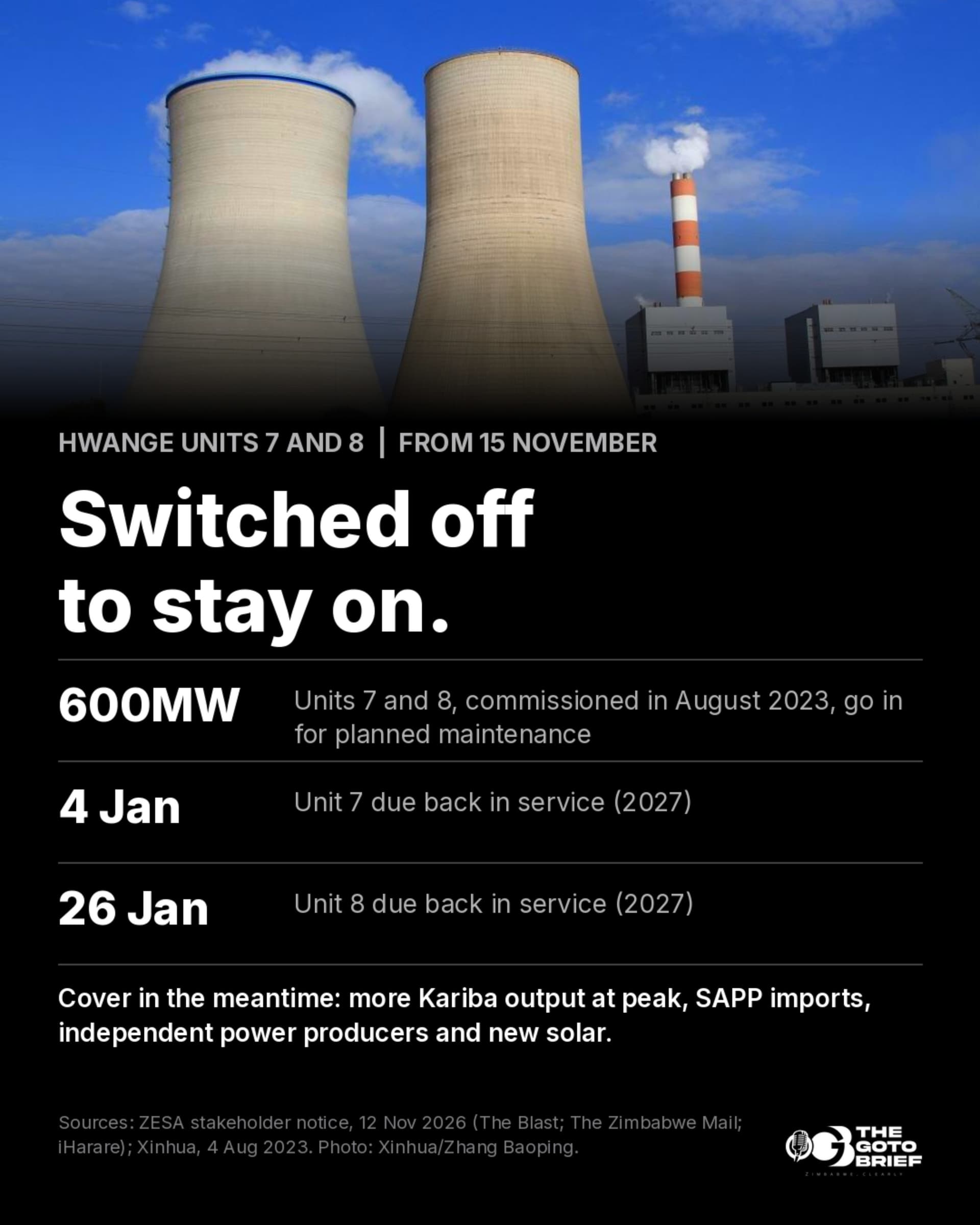
- Hwange Units 7 and 8, with a combined installed capacity of 600MW, are scheduled for maintenance from November 15, 2026.
By Simba Zimunya
Zimbabwe's power utility is preparing to take two of the country's newest electricity-generating units offline for planned maintenance, temporarily removing 600 megawatts of installed generating capacity from the national grid.
Hwange Power Station Units 7 and 8 are scheduled to undergo maintenance beginning November 15, 2026, according to a stakeholder notice issued by the Zimbabwe Electricity Supply Authority (ZESA) on November 12.
Unit 7 is expected to return to service on January 4, 2027, while Unit 8 is scheduled to resume generation on January 26, 2027.
The shutdown will test whether Zimbabwe can maintain reliable electricity supply while two major generating units undergo essential maintenance.
The maintenance will temporarily reduce available generating capacity, but ZESA says the work forms part of its routine asset management strategy aimed at improving operational reliability.
Why Are the Two Units Being Switched Off?
Units 7 and 8 each have an installed capacity of 300 megawatts and were commissioned in August 2023.
Together, they added 600MW to Zimbabwe's electricity generation capacity, making them an important part of the country's power supply system.
However, power-generation equipment requires periodic maintenance to remain reliable. Boilers, turbines and other critical components experience wear during continuous operation and need inspection, servicing and, where necessary, replacement of worn parts.
Planned maintenance allows engineers to carry out this work under controlled conditions rather than waiting for unexpected equipment failures.
An unplanned breakdown can disrupt electricity generation without warning and may take longer to resolve, depending on the nature of the fault and the availability of replacement components.
How Will Zimbabwe Manage the Electricity Gap?
With both units temporarily unavailable, attention will turn to other sources of electricity to help meet national demand.
According to the source material, ZESA intends to manage the reduced supply through a combination of increased generation at Kariba Power Station during peak-demand periods, electricity imports through the Southern African Power Pool, supply from independent power producers under existing agreements, and additional solar generation as new plants connect to the national grid.
These measures are intended to reduce the impact of the maintenance programme on electricity consumers.
However, the availability of alternative supplies does not guarantee uninterrupted electricity throughout the maintenance period. Actual supply will depend on generation performance, water availability, imports and national demand.
A Test for Zimbabwe's Energy Diversification
The planned shutdown highlights the importance of having multiple sources of electricity rather than relying heavily on a limited number of generating units.
Coal-fired generation, hydroelectricity, solar power, independent producers and regional electricity imports all have a role to play in strengthening the national supply system.
Zimbabwe's ability to manage the temporary loss of 600MW will therefore depend not only on the maintenance work itself, but also on how effectively alternative sources can meet demand.
The maintenance programme also raises an important question: can the country's electricity supply remain stable while major generating units undergo essential servicing?
Households Urged to Use Electricity Responsibly
Consumers are being encouraged to use electricity efficiently during the maintenance period, particularly during peak-demand hours.
Switching off unnecessary appliances, avoiding wasteful electricity use and reporting faults can help reduce pressure on the power system.
ZESA has provided the fault-reporting number 704.
Planned Maintenance Versus Unexpected Breakdowns
Taking two major generating units offline at the same time may raise concerns among electricity consumers, especially in a country where power supply reliability remains an important economic and household issue.
However, postponing essential maintenance simply to keep generating units online can create greater operational risks in the longer term.
The key measure of success will be whether the work is completed within the announced schedules, both units return to service as planned, and alternative generation sources adequately support the country during the shutdown.
For now, Zimbabwe faces a temporary reduction in available generation capacity, with Unit 7 expected back in January and Unit 8 following later that month.
Sources & reporting
The Granite Post Zimbabwe verifies documents, interviews sources and checks official records before publication. Our editorial standards explain what we require before a story runs.
Read our editorial standardsRelated Articles

Join the discussion
Share your view.
No comments yet. Be the first.