
Kenyan Farmers Delegation Marvels at Zimbabwe’s Chivaraidze Agro-Industrial Operations
In short
- Nine Kenyan farmers visited Chivaraidze Agro-Industrial Park to learn about Zimbabwe’s integrated farming and processing model.
By Simba Zimunya
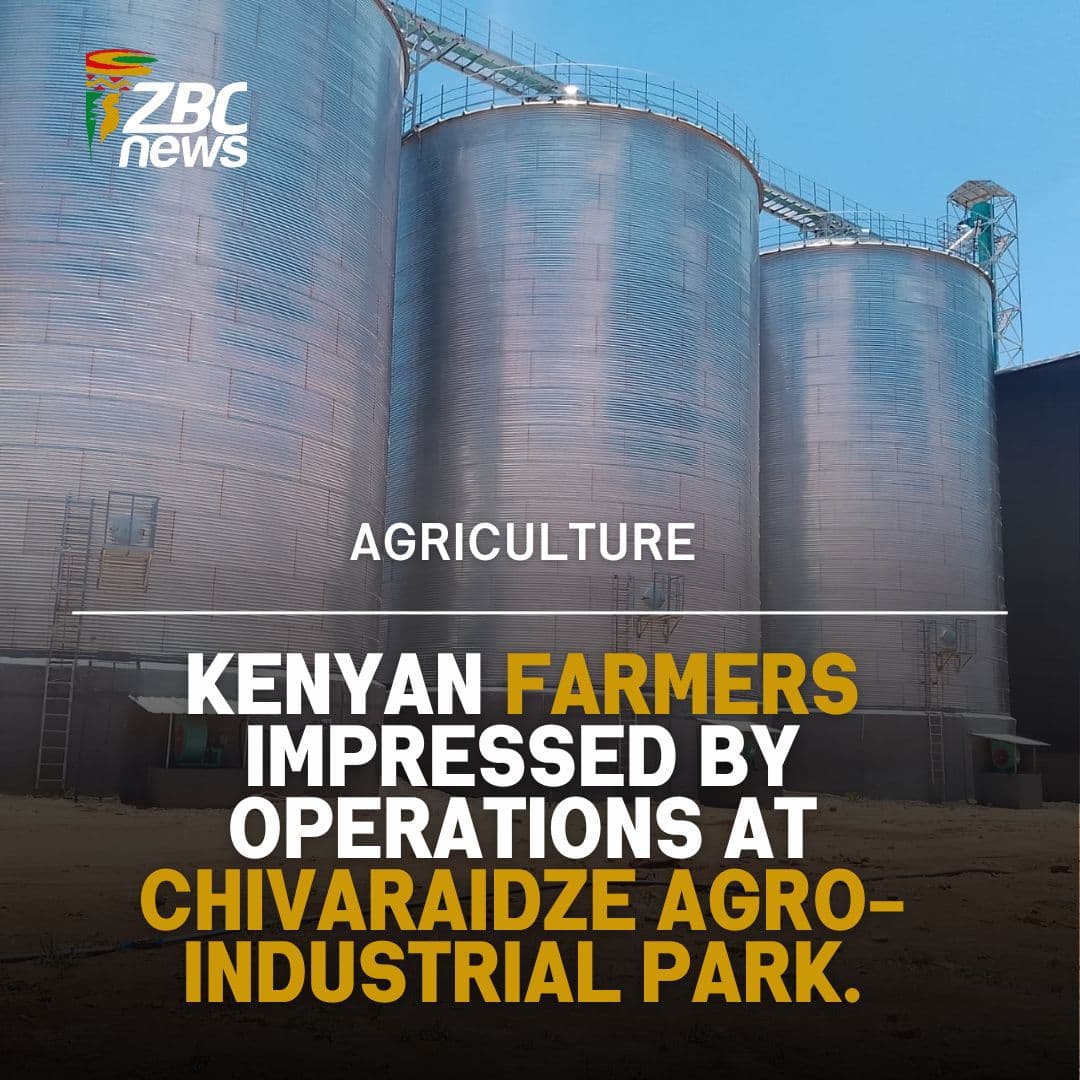
A nine-member Kenyan delegation comprising farmers has expressed admiration for operations at Chivaraidze Agro-Industrial Park in Goromonzi, highlighting Zimbabwe’s approach to integrating agricultural production with processing and value addition.
The delegation visited the agricultural facility to observe how farming activities can be connected to agro-processing, allowing more value to be generated from agricultural produce before it reaches the market.
The model reflects a broader shift towards integrated agricultural systems, where production, processing and marketing are treated as connected stages of one value chain.
Local agro-processing can help retain more value within agricultural supply chains and create opportunities for businesses and employment.
Moving Beyond Raw Agricultural Production
Agriculture remains an important part of Zimbabwe’s economy, but the sector’s potential extends beyond growing crops and producing livestock.
Processing agricultural products locally can create additional business opportunities, support manufacturing, generate employment and reduce dependence on imported finished products.
At Chivaraidze Farm, the integrated approach has previously been presented as a way of developing a complete agrifood value chain, including livestock production, processing and the manufacture of finished products.
The concept is intended to retain more economic value within the agricultural sector rather than relying solely on the sale of raw commodities.
Regional Cooperation and Agricultural Learning
The Kenyan farmers’ visit also highlights opportunities for knowledge-sharing between African agricultural producers.
Countries across the continent face common challenges, including improving productivity, strengthening food security, reducing post-harvest losses and developing reliable markets for agricultural products.
Visits of this nature can create opportunities for farmers to exchange practical experiences and explore approaches that may be adapted to their own agricultural environments.
For Zimbabwe, the broader challenge is ensuring that integrated agricultural projects translate into measurable benefits for farmers, workers, businesses and surrounding communities.
The success of agro-industrial development will ultimately depend on sustained investment, efficient production, reliable markets and the ability to process agricultural products competitively.
Sources & reporting
The Granite Post Zimbabwe verifies documents, interviews sources and checks official records before publication. Our editorial standards explain what we require before a story runs.
Read our editorial standardsRelated Articles


Join the discussion
Share your view.
No comments yet. Be the first.