
Sable Chemicals Targets 240,000 Tonnes of Annual Fertiliser Production as Zimbabwe Seeks to Cut Imports
In short
- Sable Chemicals plans to produce 240,000 tonnes of ammonium nitrate fertiliser annually as Zimbabwe seeks to rebuild local manufacturing and reduce imports.
By Simba Zimunya
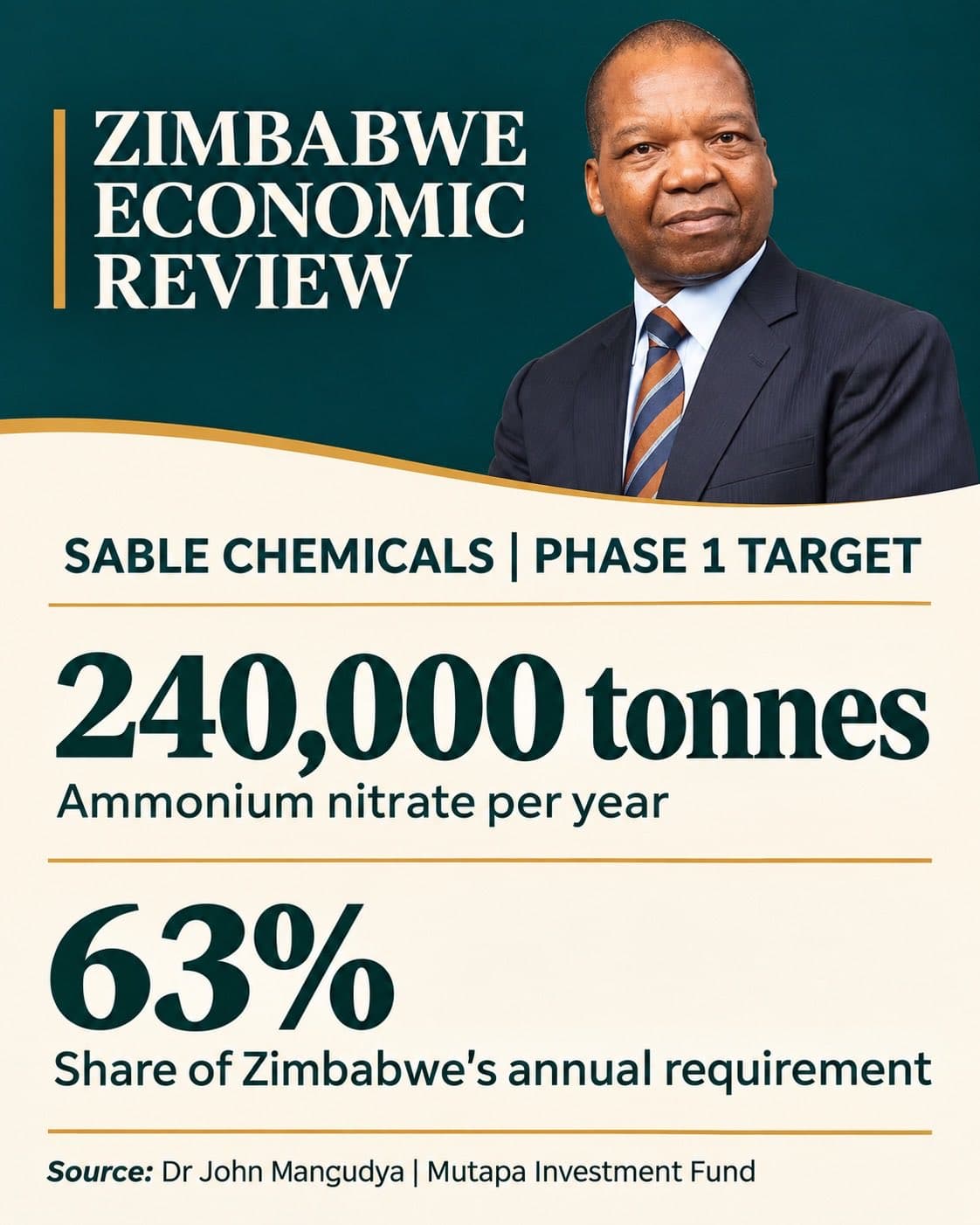
Sable Chemical Industries is targeting annual production of 240,000 tonnes of ammonium nitrate (AN) fertiliser under its first phase of operations, a move expected to cover approximately 63 percent of Zimbabwe’s national requirement for the product.
Mutapa Investment Fund (MIF) chief executive officer Dr John Mangudya revealed the production target while addressing participants at the Zimbabwe National Defence University in Harare.
Mangudya said the ammonia supply required for production had been secured, while rail tankers were ready to facilitate its transportation to the Kwekwe-based fertiliser manufacturer.
Consistent local fertiliser production could strengthen agricultural supply chains and reduce pressure on foreign currency, but farmers will ultimately judge the project by availability and price.
The development forms part of efforts to revive Zimbabwe’s domestic fertiliser manufacturing industry and reduce the country’s reliance on imported agricultural inputs.
US$13.6 million invested in Sable Chemicals
The Mutapa Investment Fund has injected approximately US$13.6 million into the refurbishment of Sable Chemicals’ manufacturing plant.
According to Mangudya, the refurbishment programme was 97 percent complete at the time of his presentation.
The investment is intended to restore production capacity at the company, which had experienced prolonged operational challenges and a shutdown lasting approximately three years.
Sable Chemicals is Zimbabwe’s sole producer of ammonium nitrate fertiliser, making its recovery important to domestic supplies of the nitrogen-based agricultural input.
Reducing the fertiliser import bill
Zimbabwe continues to spend substantial amounts of foreign currency importing fertiliser to meet agricultural demand.
Figures cited by Mangudya indicated that the country imported fertiliser worth approximately US$399.09 million between January and September 2026.
Increasing local production could help reduce this import bill, retain more foreign currency within the economy and strengthen the domestic agricultural supply chain.
The targeted output of 240,000 tonnes would represent a substantial contribution towards national ammonium nitrate requirements, although it would not eliminate the need for imports.
What it means for farmers
Ammonium nitrate is an important nitrogen fertiliser used by farmers to support crop growth and improve agricultural productivity.
A reliable domestic supply could help reduce exposure to international supply disruptions, shipping delays and fluctuations in imported fertiliser prices.
However, increased production capacity does not automatically guarantee cheaper fertiliser for farmers. The final price will also depend on imported ammonia costs, electricity, transport, operating expenses and distribution arrangements.
The availability of sufficient working capital and consistent plant operations will also be important in sustaining production.
A wider strategy to rebuild local fertiliser production
The Sable Chemicals investment forms part of a broader Mutapa Investment Fund programme aimed at restoring Zimbabwe’s fertiliser manufacturing value chain.
The Fund has also injected approximately US$5.3 million into Dorowa Mine to refurbish its processing plant, with the intervention expected to increase production capacity from 15,000 tonnes to 80,000 tonnes.
The two interventions are intended to strengthen domestic production of different fertiliser products and reduce dependence on imported inputs.
For Zimbabwe, the central test will be whether the investments translate into consistent factory output, reliable supplies and more affordable agricultural inputs.
If the targeted production levels are achieved and sustained, Sable Chemicals could play a significant role in supporting local farmers and reducing the country's fertiliser import burden.
Sources & reporting
The Granite Post Zimbabwe verifies documents, interviews sources and checks official records before publication. Our editorial standards explain what we require before a story runs.
Read our editorial standardsRelated Articles



Join the discussion
Share your view.
No comments yet. Be the first.