
Simbisa’s Zimbabwe Sales Rise 23% Despite US$2.1m Fast-Food Tax Bill
 By Rebecca Zimera3 min read
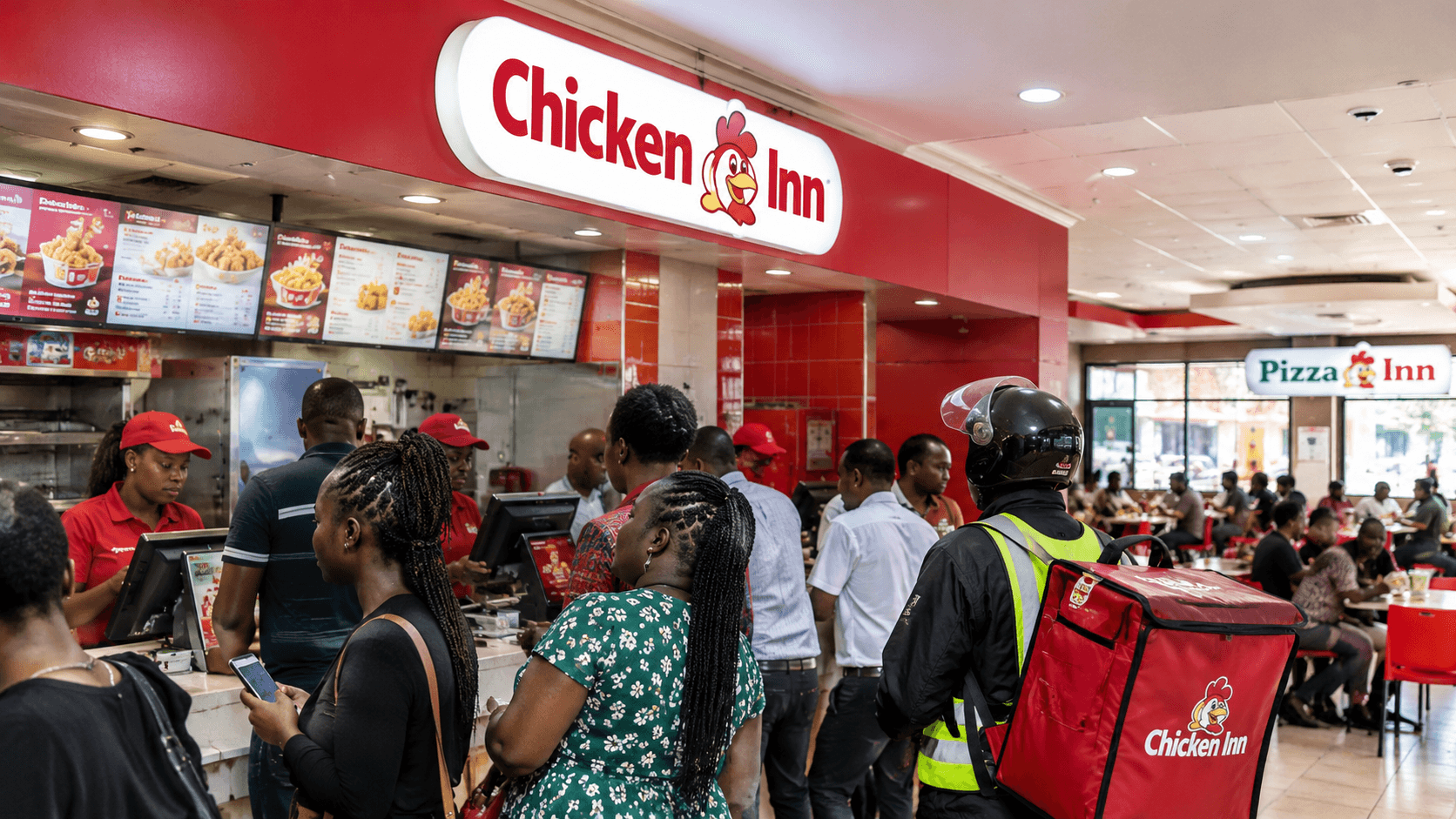
The restaurant group, which operates brands including Chicken Inn, Pizza Inn and Creamy Inn, also reported an 11 percent increase in customer volumes, with customer transactions reaching approximately 53.6 million.
Zimbabwe remained the company's largest market, contributing 72 percent of group revenue, while total group revenue increased by 20 percent.
The figures highlight the continued expansion of organised fast-food businesses in Zimbabwe, although they do not necessarily indicate a wider recovery in household purchasing power.
Customer growth drives expansion
Simbisa's Zimbabwe business recorded a 75 percent increase in delivery orders and an 11 percent rise in average customer spending during the reporting period.
Simbisa's performance offers insight into Zimbabwe's consumer market, the cost of operating restaurants and the challenges businesses face in balancing profitability with affordability.
The company also added a net 17 stores, bringing its Zimbabwe network to 352 counters by the end of June.
Management attributed the performance to improvements in product quality, customer service and value offerings.
However, the increase in revenue reflects several factors, including additional outlets, higher customer traffic and changes in average spending.
It would therefore be misleading to interpret the figures as evidence that Zimbabwean consumers are generally becoming wealthier.
The reported 53.6 million customer count also represents customer traffic rather than 53.6 million unique individuals, since customers can make multiple purchases throughout the year.
Simbisa's performance nevertheless demonstrates the importance of convenience, distribution networks and accessible product offerings in Zimbabwe's competitive food-service market.
Tax and operating costs remain a test
Despite its strong revenue growth, Simbisa continued to face pressure from taxation, electricity costs, wages and imported inputs.
The company reported paying US$2.1 million in fast-food tax during the financial year, highlighting the additional burden associated with operating in Zimbabwe's restaurant industry.
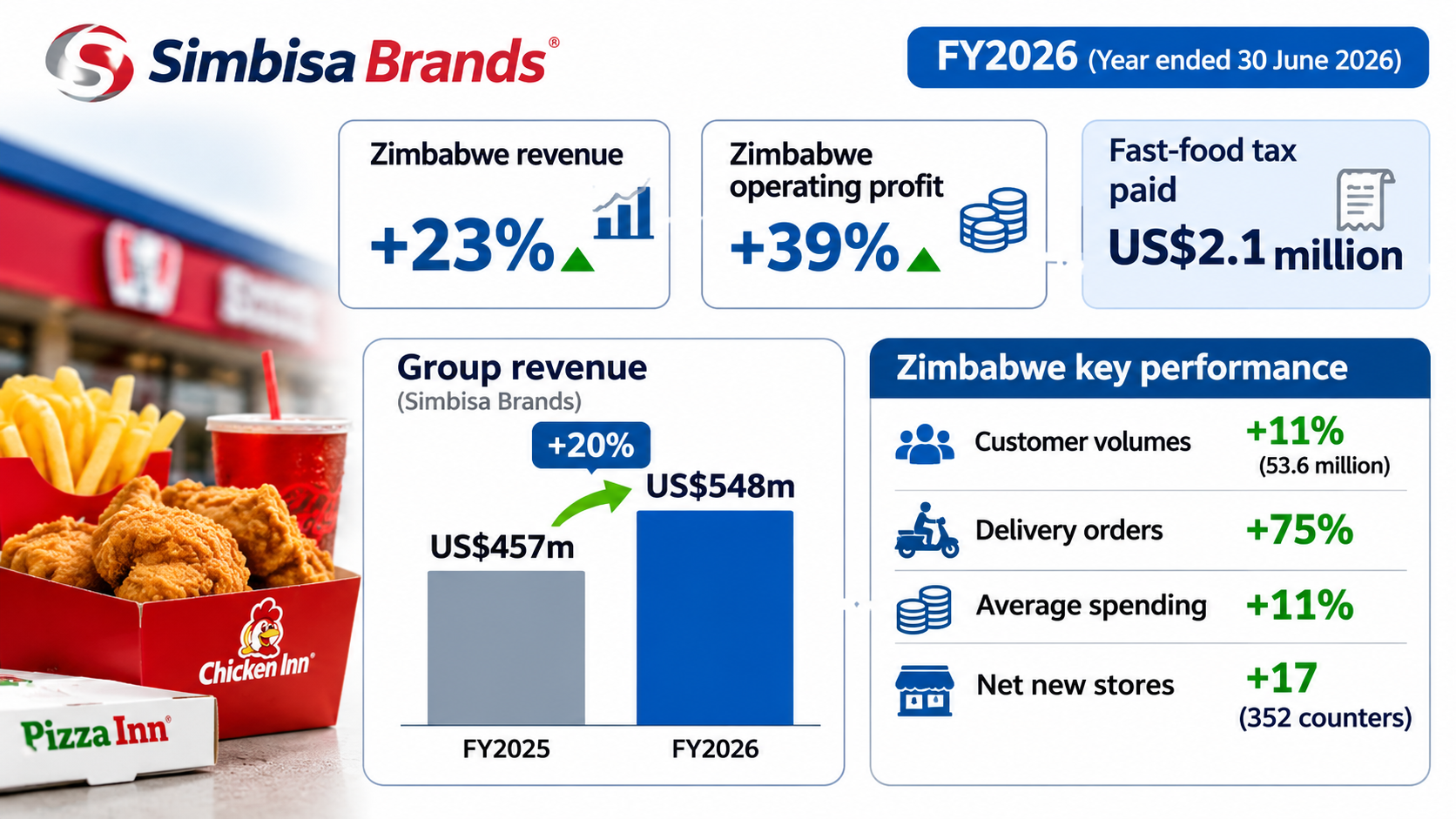
Its Zimbabwe operating profit nevertheless increased by 39 percent, supported by procurement efficiencies, productivity improvements and tighter expenditure controls.
The improvement suggests that Simbisa was able to expand profitability while managing rising operating costs.
However, the financial disclosures do not establish how much of the fast-food tax was absorbed by the company or passed on to consumers through menu prices.
That distinction matters because higher taxes can affect businesses and customers differently, depending on pricing decisions, competitive conditions and operating margins.
Simbisa's regional operations also illustrate the complexity of consumer demand.
In Kenya, customer volumes increased by 14 percent while average spending measured in US dollars declined by three percent, demonstrating that higher transaction volumes do not always translate into greater spending per customer.
For Zimbabwe, the broader question is whether restaurant operators can continue expanding while keeping meals affordable and maintaining profitability.
Simbisa's latest results show that its business model remains capable of attracting customers and generating stronger earnings despite difficult operating conditions.
But the company's future performance will depend on sustaining customer traffic, controlling costs and ensuring that expansion produces lasting financial returns.
The US$2.1 million fast-food tax bill is an important part of that story, although the results alone do not establish its direct effect on menu prices.
Simbisa has demonstrated resilience. The next challenge is maintaining that momentum without weakening its competitive position in a price-sensitive consumer market.
Sources & reporting
The Granite Post Zimbabwe verifies documents, interviews sources and checks official records before publication. Our editorial standards explain what we require before a story runs.
Read our editorial standards
Related Articles
Join the discussion
Share your view.
No comments yet. Be the first.