
Zimpost Launches Drone Delivery Service in Rural Zimbabwe
 By Rebecca Zimera4 min read
In short
- Zimpost and Drone Solutions demonstrated a parcel delivery by drone between Bambadzi and Masendu Digital Centre in Bulilima on 10 October.
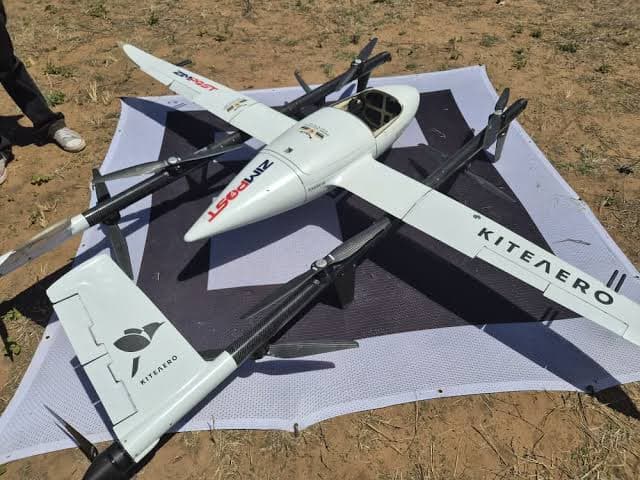
Zimbabwe's postal operator, Zimpost, has launched a drone delivery initiative in Matabeleland South, demonstrating how unmanned aircraft could be used to transport parcels to communities that are difficult to reach through conventional delivery networks.
The launch took place at Bambadzi Shopping Centre in Bulilima District on Saturday, 10 October, where a drone transported a parcel between Bambadzi and Masendu Digital Centre.
The initiative is being developed through a partnership between Zimpost and Drone Solutions, as the postal operator explores technology to improve delivery services, particularly in rural areas.
Information Communication Technology, Postal and Courier Services Minister Tatenda Mavetera attended the launch alongside government officials, representatives of the postal sector and local community leaders.
Drone delivery demonstrated in Bulilima
Drone deliveries could improve access to postal and courier services in remote Zimbabwean communities. Their long-term usefulness will depend on safety approvals, operating costs, reliability and whether the technology can be expanded beyond demonstrations.
The demonstration showed how small unmanned aircraft could move parcels between locations without relying entirely on road transport.
For communities separated by long distances or difficult road conditions, drone deliveries could offer an alternative for certain types of goods, particularly lightweight and time-sensitive consignments.
However, Saturday's demonstration does not establish that a nationwide commercial drone delivery network is already operational.
Details such as delivery charges, maximum parcel weight, operating distances and the timetable for expanding the service have not been publicly confirmed.
These will be important in determining whether drone deliveries can become a practical service for ordinary customers.
Government calls for safety and affordability
Speaking at the launch, Mavetera welcomed the initiative but emphasised that technological development must deliver measurable benefits to communities.
She said aviation approvals, safety, reliability and cost would need to guide any expansion of drone delivery operations.
The minister also stressed that proposals involving medical supplies would require the involvement of the relevant health authorities.
Her remarks placed attention on the regulatory requirements that would accompany wider deployment of unmanned aircraft.
Drones operating in civilian airspace must comply with applicable aviation rules, including authorisations overseen by the Civil Aviation Authority of Zimbabwe.
Safety, route planning, weather conditions and operational reliability will be important considerations before drone deliveries can be expanded.
Zimpost plans to introduce artificial intelligence
Zimpost Postmaster-General Maxwell Chitendeni said the initiative formed part of efforts to modernise the postal service and develop more flexible logistics solutions.
He also outlined plans to introduce artificial intelligence into the organisation's distribution network.
According to Chitendeni, AI-based systems could assist with identifying efficient delivery routes in urban areas, potentially improving distribution planning and reducing unnecessary travel.
The proposal reflects a broader shift towards digital logistics, where software, automation and real-time information are increasingly used to manage deliveries.
The introduction of such systems would require investment in technology, reliable operational data and staff training.
Zimpost has not yet announced a timetable for implementing the proposed AI route-planning system.
Rural communities could benefit
The choice of Bulilima for the launch places attention on the potential benefits of new delivery technologies outside Zimbabwe's major cities.
Rural communities often face higher transport costs and longer delivery times because of distance, road conditions and limited logistics infrastructure.
Drone deliveries could help address some of these challenges, particularly where consignments are small and urgent.
Potential applications include transporting documents, agricultural supplies and other lightweight goods, subject to technical and regulatory requirements.
Medical deliveries could also be considered in future, although no routine medical drone delivery service was confirmed at Saturday's launch.
For businesses, the usefulness of the technology will depend on whether it can provide dependable deliveries at prices customers can afford.
From demonstration to regular service
The partnership between Zimpost and Drone Solutions represents an attempt to expand the role of the traditional postal operator in an increasingly digital economy.
But the commercial success of the initiative remains untested.
Regular operations would require suitable aircraft, trained operators, maintenance arrangements, aviation approvals and an economically sustainable delivery model.
The wider transformation of Zimbabwe's transport services has also raised questions about how regulation keeps pace with technology.
Although drone deliveries and ride-hailing operate under different regulatory systems, both illustrate the challenges of introducing technology into established transport markets.
For Zimpost, the next test will be whether the Bambadzi demonstration can be developed into a reliable service that reaches customers beyond the launch event.
The company has not yet provided a confirmed national rollout schedule.
Until then, the initiative remains an early step towards using drones in Zimbabwe's postal and courier network.
How we reported this
The Granite Post Zimbabwe verifies documents, interviews sources and checks official records before publication. Our editorial standards explain what we require before a story runs.
Read our editorial standardsAbout the author
Rebecca Zimera is Senior Business and Courts Correspondent at The Granite Post. She reports on money and property in Zimbabwe, covering economic policy, household finances, local government spending and the court cases that decide who owns what
View author profileLatest Updates

Business & Economy
Harare to open COMESA business programme ahead of Thursday summit
Related Articles





Premium
View all Premium →
ZiG Inflation Falls to 2.9% but Bank Loans Still Cost Over 40%
Annual ZiG inflation dropped to 2.9% in August, the lowest since independence, 18 April 1980. But the central bank says some banks have not cut lending rates since June, leaving borrowers paying more than 40% while prices barely move.


Support independent journalism
Support our journalismSupport The Granite Post Zimbabwe
Your subscription helps fund investigations, public-interest reporting and deeper Zimbabwe coverage.





Comments
Join the conversation
Share your view.
No comments yet. Be the first.