
Econet Leads Zimbabwe's 5G Rollout with 353 Base Stations in Early 2026
 By Rebecca Zimera3 min read
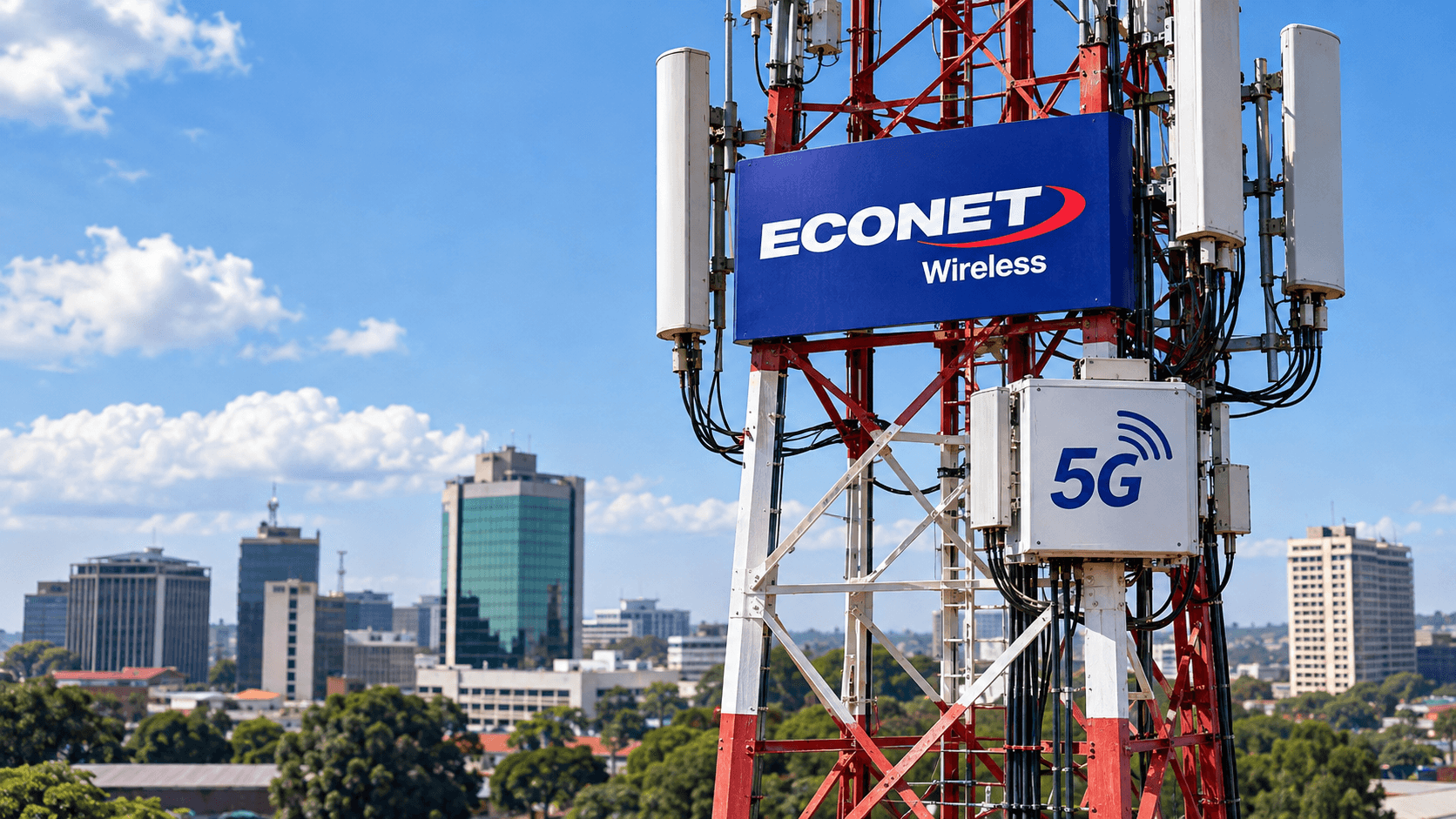
The Postal and Telecommunications Regulatory Authority of Zimbabwe reported that mobile network operators deployed 13 new 5G sites during the quarter, bringing Zimbabwe's total 5G coverage to 379 base stations.
Econet added 13 new 5G base stations during the first quarter, alongside 126 LTE sites, to exit the period with 7,430 base stations across all technologies.
NetOne, the state-owned mobile operator, operated 26 5G base stations at the end of March 2026, unchanged from December 2025, while expanding its fourth-generation network from 1,743 to 1,778 base stations.
Mobile network operators collectively doubled capital expenditure in the fourth quarter of 2025, with investment surging 112 percent from ZWG508.92 million to ZWG1.08 billion, POTRAZ data shows.
The concentration of 5G infrastructure deployment reflects Econet's market dominance and capital availability, while population coverage of 18.94 percent indicates that advanced mobile connectivity remains predominantly an urban service. With mobile internet traffic growing nearly 12 percent quarter-on-quarter, network capacity expansion will determine whether operators can maintain service quality as data consumption increases.
Capital expenditure increased a further 152 percent in the first quarter of 2026 to ZWG2.73 billion, reflecting continued infrastructure expansion across the sector.
Network Coverage and Market Position
Fifth-generation network coverage reached 18.94 percent of Zimbabwe's population by the end of the first quarter, POTRAZ reported, with deployment concentrated in urban centres including Harare and Bulawayo.
Mobile penetration, which measures active SIM cards rather than unique users, stood at 107.04 percent in the fourth quarter of 2025, while POTRAZ's internet penetration indicator reached 84.6 percent and broadband penetration 82.6 percent.
Mobile internet and data traffic grew 11.85 percent to 179.33 petabytes in the first quarter of 2026, up from 160.33 petabytes in the final quarter of 2025.
Econet recorded a 20.14 percent increase in mobile data traffic to 156.4 billion megabytes, lifting its mobile internet and data traffic market share by 6.01 percentage points to 87.21 percent.
The operator maintained a 73.75 percent share of Zimbabwe's 16.78 million active mobile subscriptions in the fourth quarter of 2025, with NetOne holding 24.44 percent and Telecel 1.81 percent.
Technology Partnerships
Econet signed a memorandum of understanding with Ericsson at Mobile World Congress 2026 in Barcelona on 5 March to collaborate on AI-driven radio access network optimisation, 5G Advanced features and Internet of Things-enabled services.
Alain Maupin, Ericsson vice president for Europe, Middle East and Africa, said in an interview with ITWeb Africa in Harare on 7 October that Econet was "very aggressive" in its AI strategy.
"For instance, the area of AI strategy, Econet is very aggressive. They want to go all out on AI, they want to really leverage the good benefits of AI in their infrastructure and operations," Mr Maupin said.
Econet says it completed a migration to Google Cloud in August 2026, becoming what the company described as the first major business in Zimbabwe to complete such a comprehensive cloud migration.
Dr Douglas Mboweni, Econet Wireless Zimbabwe Group chief executive, said the migration provides stronger business continuity and rapid disaster recovery capabilities.
Mr Maupin described Zimbabwe as having a "fantastic pool of engineers and competence", which he said was an important resource for rolling out 5G and AI capabilities, but acknowledged challenges in developing AI skills as competition for talent intensifies across Africa.
Sources & reporting
The Granite Post Zimbabwe verifies documents, interviews sources and checks official records before publication. Our editorial standards explain what we require before a story runs.
Read our editorial standards
Related Articles


Join the discussion
Share your view.
No comments yet. Be the first.