
Zimbabweans Urged to Prepare for Extreme Heat as El Niño Influences 2026/27 Season
In short
- Zimbabweans are being encouraged to prepare for hotter conditions and possible below-normal rainfall during the 2026/27 season.
Zimbabweans have been urged to take precautions against excessive heat as the country prepares for a potentially hotter and drier 2026/27 season influenced by El Niño.
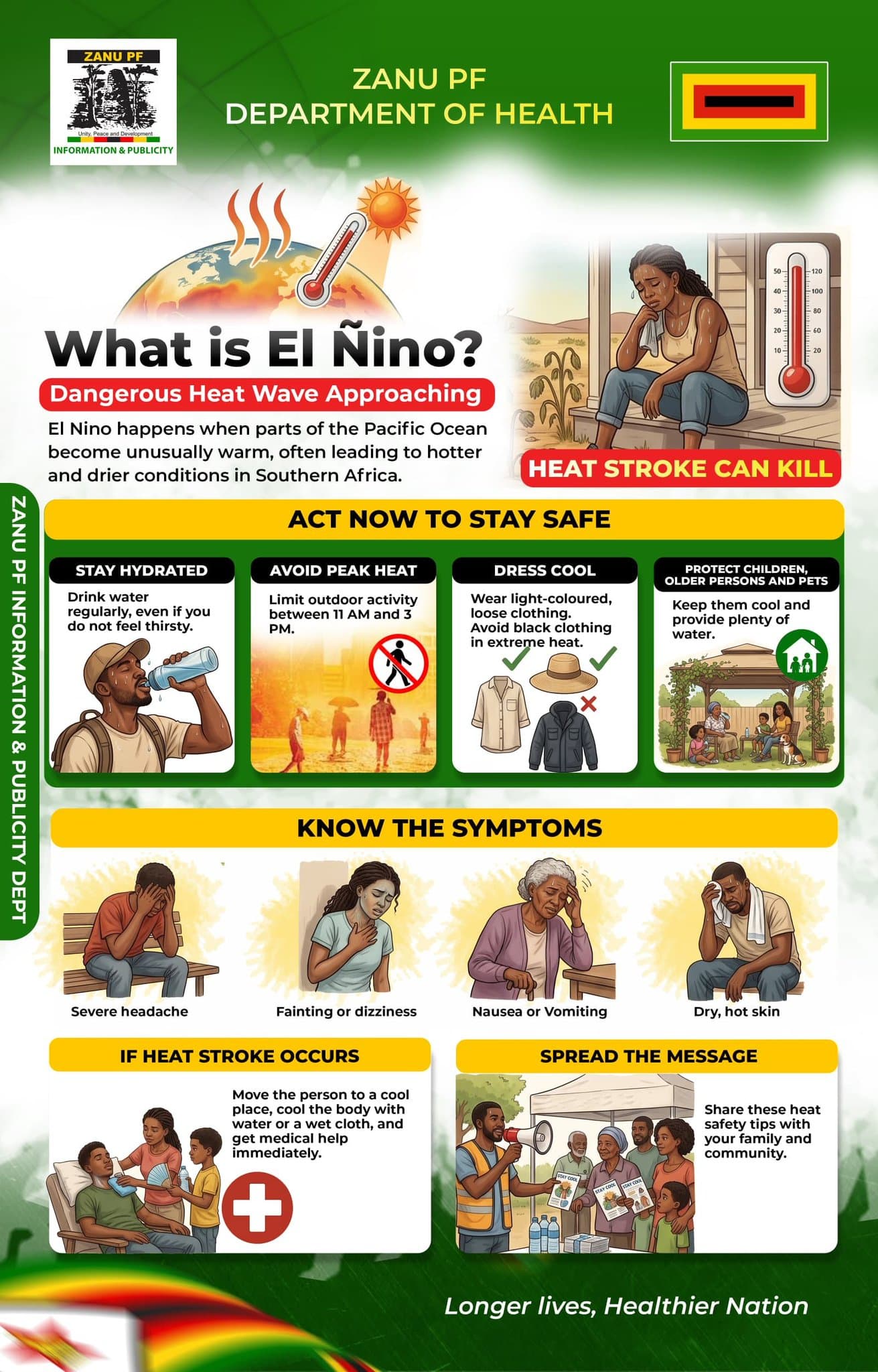
The ZANU PF Department of Health has issued a public awareness message highlighting the dangers of extreme heat, encouraging communities to stay hydrated, avoid prolonged exposure to high temperatures and protect vulnerable groups.
The awareness campaign comes amid climate forecasts pointing to below-normal rainfall and warmer-than-normal conditions across Zimbabwe during the early months of the 2026/27 rainfall season.
According to the Meteorological Services Department's national climate outlook, warmer-than-normal temperatures are expected during the first three months of the season, alongside an increased likelihood of below-normal rainfall.
Extreme heat and low rainfall can affect public health, food production, livestock, water availability and household livelihoods.
What is El Niño and how could it affect Zimbabwe?
El Niño is a climate phenomenon associated with unusually warm sea-surface temperatures in parts of the central and eastern Pacific Ocean.
It influences atmospheric circulation and can disrupt normal rainfall patterns in different parts of the world.
In Southern Africa, El Niño conditions are commonly associated with reduced rainfall, prolonged dry spells and increased drought risks.
Zimbabwe's 2026/27 seasonal outlook indicates a high likelihood of below-normal rainfall, with the country also expected to experience warmer-than-normal temperatures during the early part of the season.
These conditions could increase pressure on water supplies, agriculture, livestock and household livelihoods.
However, El Niño does not mean that every part of the country will experience identical weather conditions or continuous extreme heat.
Heatstroke: A serious health risk
The ZANU PF Department of Health poster warns that prolonged exposure to excessive heat can cause heat-related illnesses, including heatstroke.
Heatstroke is a medical emergency that occurs when the body becomes dangerously overheated and can no longer regulate its temperature effectively.
Warning signs may include:
- Severe headache.
- Dizziness or fainting.
- Nausea or vomiting.
- Hot skin.
- Confusion or unusual behaviour.
- Loss of consciousness.
Heatstroke can be life-threatening and requires immediate medical attention.
Seven ways to protect yourself from excessive heat
The public awareness message encourages Zimbabweans to adopt practical measures to reduce exposure to excessive temperatures.
1. Drink water regularly
Drink sufficient water throughout the day, even when you do not feel thirsty.
2. Avoid peak afternoon heat
Limit strenuous outdoor activities during the hottest hours, particularly between 11am and 3pm when conditions may be especially hot.
3. Wear light clothing
Choose loose-fitting, lightweight and light-coloured clothing to help keep the body cool.
4. Protect vulnerable people
Pay particular attention to children, older people and individuals who may struggle to regulate their body temperature.
5. Stay in cool or shaded places
Whenever possible, avoid prolonged exposure to direct sunlight and spend time in well-ventilated or shaded areas.
6. Never leave children or pets inside parked vehicles
Temperatures inside vehicles can rise rapidly, creating dangerous conditions even when the weather outside does not appear extremely hot.
7. Watch for symptoms of heat-related illness
Seek medical assistance if someone develops concerning symptoms after exposure to excessive heat.
What should you do if someone suffers heatstroke?
Heatstroke requires urgent medical attention.
If someone shows signs of heatstroke, move them to a cooler or shaded place, remove unnecessary outer clothing and begin cooling their body using cool water or wet cloths.
Arrange emergency medical assistance immediately. Do not give fluids to someone who is unconscious or unable to swallow safely.
Rapid cooling is important while waiting for medical help.
Public awareness becomes increasingly important
As Zimbabwe prepares for a potentially challenging rainfall season, public awareness about heat-related illnesses is becoming increasingly important.
The effects of excessive heat can extend beyond personal discomfort, affecting outdoor workers, schoolchildren, farmers, older people and households with limited access to reliable water and cooling facilities.
While the ZANU PF Department of Health has highlighted the need for communities to prepare, residents should also follow official weather updates and health guidance from the Meteorological Services Department and Ministry of Health and Child Care.
The message is clear: staying hydrated, avoiding unnecessary exposure to excessive heat and protecting vulnerable members of society can help reduce the risks associated with high temperatures.
As the country navigates the 2026/27 season, preparedness and public awareness will be essential in protecting lives and livelihoods.
Sources & reporting
The Granite Post Zimbabwe verifies documents, interviews sources and checks official records before publication. Our editorial standards explain what we require before a story runs.
Read our editorial standardsRelated Articles

Join the discussion
Share your view.
No comments yet. Be the first.