
Harare’s 7.4MW Rooftop Solar Project Begins Feeding Power into National Grid
In short
- A 7.4MW rooftop solar plant in Harare has started feeding electricity into the national grid through a private power-wheeling arrangement.
By Simba Zimunya
Zimbabwe’s renewable energy sector has reached an important milestone following the commissioning of a 7.4-megawatt rooftop solar power plant in Harare, which has started supplying electricity into the national grid under a power-wheeling arrangement.
The project, developed by Limpopo Way Power at Willowvale Industrial Site, introduces a model that allows privately generated solar electricity to be transported through the national grid to an industrial customer located elsewhere.
The development could create new opportunities for independent power producers (IPPs) and businesses seeking alternative electricity supplies amid Zimbabwe’s continuing energy challenges.
If commercially successful, power wheeling could give more Zimbabwean businesses access to privately generated renewable electricity and attract further investment in the energy sector.
According to a report published by The Herald on 2 November 2026, the plant initially began generating approximately 5.55MW, representing 75 percent of its installed capacity. The remaining capacity was expected to become available following the replacement of a faulty transformer.
How the Harare Solar Project Works
Unlike conventional rooftop solar installations that primarily supply electricity to the buildings on which they are installed, the Limpopo Way Power project is designed to feed its electricity output into the national grid.
The electricity is then delivered to an agreed private off-taker through a power-wheeling arrangement with the Zimbabwe Electricity Transmission and Distribution Company (ZETDC).
Power wheeling allows an independent electricity producer to generate power in one location and use the national transmission and distribution network to deliver it to a customer elsewhere.
This arrangement creates opportunities for businesses with substantial electricity requirements but without suitable land or resources to develop their own power plants.
It also allows solar developers to identify locations with suitable infrastructure and available space before securing customers who need electricity.
33,500 Square Metres of Rooftop Space Transformed into a Power Station
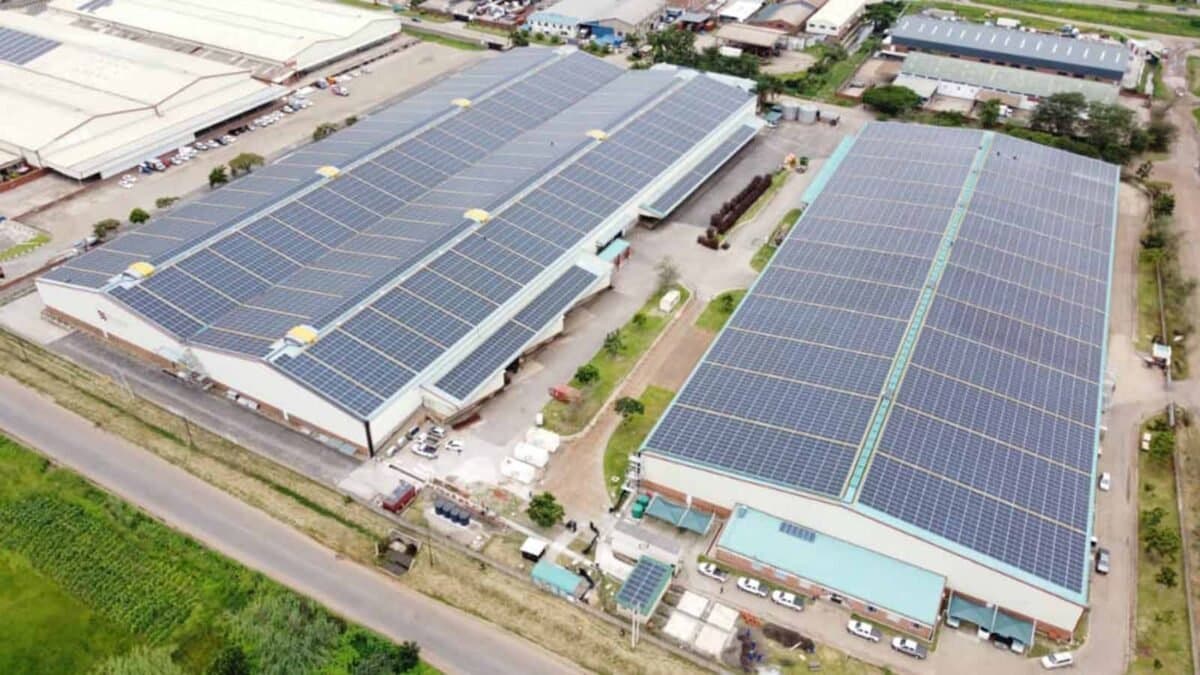
The solar installation covers approximately 33,500 square metres across two adjacent warehouses measuring 20,000 and 13,500 square metres.
Instead of acquiring additional land for a conventional solar farm, the developers have utilised existing industrial rooftop space to accommodate the solar panels.
The project also involved constructing a 7.2-kilometre, 33kV electricity line connecting the facility to Kambuzuma Substation.
Solar Energy Projects served as the engineering, procurement and construction contractor.
The location is significant because the facility feeds electricity into the grid close to Harare’s industrial demand centres.
The project is also expected to reduce technical electricity losses on the network by an estimated 1.5MW, according to the reported project details.
Why Power Wheeling Matters for Zimbabwean Businesses
Electricity reliability remains a major concern for manufacturers, mining companies, agricultural processors and other businesses that depend on consistent power supplies.
Interruptions can disrupt production schedules, increase operating costs and force companies to rely on diesel generators or alternative energy systems.
The power-wheeling model offers another option by connecting private electricity generation with businesses that require additional or alternative supplies.
For industrial customers, the arrangement could provide greater control over electricity procurement and improve energy planning.
For independent power producers, it creates a potential commercial opportunity to sell electricity without necessarily locating generation facilities at the customer’s premises.
Could Zimbabwe Become More Attractive to Renewable Energy Investors?
The success of the Limpopo Way Power project could influence how future private-sector energy investments are structured.
Zimbabwe has significant solar energy potential, but expanding renewable generation requires more than installing panels.
Investors also need clear electricity purchasing agreements, predictable wheeling charges, reliable grid connections and confidence that generated power can reach customers.
The Harare project provides a practical demonstration of how existing public electricity infrastructure can support privately funded generation.
However, the long-term commercial success of this model will depend on the costs of using the national grid, available transmission capacity and the financial sustainability of agreements between generators and customers.
Supporting Industrialisation and Economic Growth
Reliable electricity is essential for Zimbabwe’s industrialisation ambitions under National Development Strategy 2 (NDS2) and Vision 2030.
Manufacturing, mining, agriculture and other productive sectors require dependable energy supplies to expand production, improve competitiveness and attract investment.
Decentralised renewable energy projects could help diversify electricity sources while reducing pressure on conventional generation infrastructure.
Projects such as Limpopo Way Power may also create opportunities for skilled employment in solar installation, electrical engineering, operations and maintenance.
Nevertheless, the number of jobs and wider economic benefits will depend on the expansion of the sector and the development of local technical capacity.
A New Opportunity, but More Work Remains
The commissioning of the 7.4MW Harare rooftop solar plant represents a significant development in Zimbabwe’s efforts to attract private investment into electricity generation.
Its most important contribution may be demonstrating that solar electricity can be generated at one location and commercially delivered to an industrial customer through the national grid.
If the arrangement proves reliable and financially sustainable, it could encourage similar investments in other industrial centres, including Bulawayo, Gweru and Mutare.
For Zimbabwe, the bigger challenge is turning this individual project into a wider system of renewable energy investments capable of supporting businesses and strengthening national electricity supplies.
The Harare project has moved beyond the planning stage. The next test is whether its power-wheeling model can be replicated successfully across the country.
Sources & reporting
The Granite Post Zimbabwe verifies documents, interviews sources and checks official records before publication. Our editorial standards explain what we require before a story runs.
Read our editorial standardsRelated Articles


Join the discussion
Share your view.
No comments yet. Be the first.