
Working Harder but Living Poorer: The Struggle of Ordinary Zimbabweans
In short
- Many Zimbabweans continue to struggle with food, transport, rent and other essentials despite signs of improved macroeconomic stability.
By Simba Zimunya
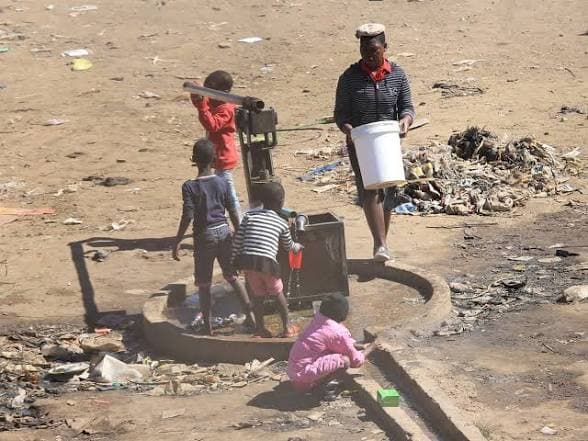
For many ordinary Zimbabweans, working hard is no longer a guarantee of financial security. People wake up early, spend hours at work, run small businesses, sell goods on the streets and take on additional income-generating activities, yet at the end of the month, many still struggle to cover their basic expenses.
The problem is becoming increasingly familiar: money comes in, bills are paid, groceries are bought, transport costs are covered, and very little remains.
For some families, saving has become a luxury. For others, even meeting basic household needs requires difficult compromises.
Economic progress should also be assessed through household purchasing power, access to essentials and people's ability to save and build financial security.
This raises an uncomfortable question: If people are working hard but still cannot afford a decent standard of living, what exactly is improving in their daily lives?
Economic Stability Does Not Always Mean Affordable Living
Zimbabwe has experienced periods of severe inflation and currency instability, making economic predictability an important national priority.
Recent official figures show that inflation has moderated considerably compared with the country's previous periods of economic instability.
According to the Zimbabwe National Statistics Agency (ZIMSTAT), the weighted year-on-year inflation rate stood at 3.5 percent in October 2026, while the month-on-month rate was 0.1 percent.
These figures are important because lower inflation can help businesses and households plan with greater certainty.
However, there is a distinction that should not be ignored: slower inflation does not mean that prices have returned to affordable levels.
When the rate of price increases slows, it does not automatically reverse the increases that households have already experienced.
A family that struggled to afford groceries when prices were rising rapidly does not suddenly become financially comfortable simply because inflation has moderated.
The real question is whether incomes have grown enough to meet the cost of essential goods and services.
The Monthly Salary That Disappears Before Month-End
For workers earning modest salaries, the cost of maintaining a household can be overwhelming.
Rent, food, electricity, water, transport, school fees and medical expenses compete for the same limited income.
In many households, the salary is already committed before it arrives.
A worker may spend a significant portion of their earnings travelling to and from work. After paying rent and purchasing groceries, little may remain for emergencies, savings or unexpected expenses.
This creates a cycle in which people work throughout the month but remain financially vulnerable.
The situation is particularly difficult for households supporting several dependants on one income.
It is therefore not enough to measure economic progress through national growth projections and inflation figures. Those indicators must also be examined alongside household purchasing power and the ability of ordinary workers to meet their basic needs.
Transport and Fuel Costs Are Putting Additional Pressure on Households
Transport is another expense that quietly reduces household income.
Workers who commute every day, traders who travel to purchase stock and businesses that distribute goods all depend on affordable transport.
FEWS NET's October 2026 Zimbabwe Food Security Outlook reported that petrol and diesel prices in October were respectively 31 percent and 34 percent higher than their February 2026 levels.
The report warned that elevated fuel costs continued to put pressure on transport expenses and the prices of goods and services.
For ordinary families, this pressure can be felt through commuting costs and the prices of products transported from farms, factories and wholesale markets.
Even people who do not own vehicles can be affected because higher operating costs may eventually be passed on to passengers and consumers.
When transport becomes more expensive, the cost of getting to work, school, hospitals and markets also increases.
Food Affordability Remains a Serious Concern
Food is one of the most important indicators of household financial security.
A family may postpone buying new clothes, delay purchasing household appliances or reduce entertainment expenses, but food is a daily necessity.
FEWS NET's October 2026 assessment warned that poor households in several typical food-deficit areas were experiencing Crisis-level food insecurity, classified as IPC Phase 3.
The report indicated that some households in districts including Buhera, Mutare, Chivi, Mberengwa and Beitbridge had exhausted their own food stocks earlier than usual.
It also reported that some households were reducing meal sizes and the frequency of meals because they could not afford adequate food.
This is not merely an economic statistic. It reflects the difficult decisions families make when available income cannot meet basic needs.
The situation also raises concerns about the potential effects of El Niño-related conditions on the 2026/27 agricultural season, particularly if poor rainfall affects production and increases pressure on food prices.
Informal Work Is Not Always a Route Out of Poverty
Zimbabwe's informal economy provides income opportunities for people who may struggle to find formal employment.
Street vendors, market traders, small business owners, transport operators and self-employed workers contribute significantly to everyday economic activity.
For many, however, informal work does not guarantee a stable income.
A trader may generate sales every day but still face rising stock replacement costs, transport expenses, competition and unpredictable customer demand.
A person selling goods cannot simply increase prices whenever operating costs rise. Customers also have limited purchasing power.
This creates a difficult situation in which both the seller and the buyer are struggling.
The informal economy should therefore not be viewed only as evidence of entrepreneurship. It also reflects the limited availability of stable and adequately paid employment opportunities.
Are Wages Keeping Up With the Cost of Living?
One of the most important questions in Zimbabwe's economic debate is whether workers' incomes are keeping pace with the cost of maintaining a household.
A salary increase may appear positive, but its actual value depends on what that income can purchase.
If transport, food, rent and other essential expenses rise faster than wages, workers effectively become poorer even when their nominal salaries increase.
This is why discussions about economic recovery must include wages, productivity, employment conditions and household purchasing power.
Employers face their own challenges, including operating expenses, taxes, infrastructure constraints and the need to remain competitive.
However, a sustainable economy must also allow workers to earn incomes that support a reasonable standard of living.
Economic growth should not be celebrated only through the performance of businesses and national indicators while the financial position of ordinary households is overlooked.
What Needs to Change?
Zimbabwe needs an economic approach that connects macroeconomic stability with improvements in everyday living conditions.
First, policies aimed at maintaining price and currency stability must continue, because unpredictable prices make planning difficult for households and businesses.
Second, employment creation must become a central priority. A growing economy should generate more productive jobs with reliable incomes, rather than relying heavily on informal survival activities.
Third, investment in agriculture, manufacturing and local production should be strengthened. Increasing domestic production can improve supply, support businesses and reduce exposure to imported goods.
Fourth, transport and energy costs need attention because they affect almost every sector of the economy and eventually influence household expenses.
Finally, policymakers should pay closer attention to purchasing power. Economic performance should be assessed not only through inflation and growth figures, but also through whether workers can afford food, rent, healthcare, education and transport without constantly falling into financial difficulty.
The Real Test of Economic Progress
Zimbabweans do not necessarily expect overnight prosperity. What many ordinary people want is the ability to work, support their families, pay their bills and put something aside for the future.
They want a salary that lasts beyond the first two weeks of the month. They want small businesses that can grow instead of merely surviving. They want parents to afford school requirements without borrowing money and families to access healthcare without facing financial ruin.
These are not unreasonable expectations.
Economic recovery should ultimately be measured by its impact on people's lives.
A country may report improved economic indicators, but those achievements will mean little to a family that still struggles to put food on the table.
Working harder should create a better life, not simply a longer list of bills to pay.
Zimbabwe's economic progress must therefore be judged by a simple but important question: are ordinary people actually becoming better off?
Sources & reporting
The Granite Post Zimbabwe verifies documents, interviews sources and checks official records before publication. Our editorial standards explain what we require before a story runs.
Read our editorial standardsRelated Articles

Join the discussion
Share your view.
No comments yet. Be the first.