
Zimbabwe Advances Russian Partnership to Produce Cancer and Diabetes Medicines Locally
 By Rebecca Zimera3 min read
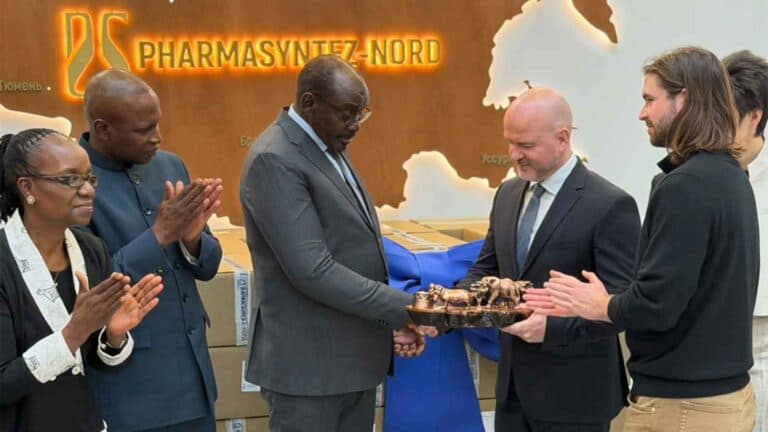
Zimbabwe is advancing a partnership with Russia to establish local manufacturing capacity for essential medicines used to treat cancer and diabetes, as Government seeks to address supply chain vulnerabilities exposed during the COVID-19 pandemic.
Vice President Kembo Mohadi arrived in Moscow on Saturday, 7 November, and travelled to St Petersburg on Monday to tour Pharmasyntez, a major Russian pharmaceutical manufacturer, and finalise implementation of bilateral health cooperation agreements following preliminary meetings by technical teams.
The visit operationalises health sector commitments reached between President Mnangagwa and Russian President Vladimir Putin at the Third Russia-Africa Summit held in Moscow on 28 and 29 October 2026.
Health and Child Care Deputy Minister Sleiman Kwidini, who leads the health-sector technical team, said the partnership would strengthen Zimbabwe's capacity to produce medicines for non-communicable diseases, reducing dependence on imports.
Non-communicable diseases, particularly cancer and diabetes, represent a growing burden on Zimbabwe's healthcare system. Local pharmaceutical manufacturing would reduce supply chain vulnerabilities, lower costs and improve access to essential medicines for chronic conditions.
"These agreements being made between countries, especially Zimbabwe and Russia, are a major milestone for Zimbabwe in terms of strengthening our healthcare system," Deputy Minister Kwidini said.
"Russia is one of the countries with advanced cancer-treatment capabilities, which we also need back home. There is a machine coming to Zimbabwe, supplied by Russian companies, to intensify the fight against cancer."
Local Manufacturing Priority
Public Health Advisor to the President and Cabinet Dr Agnes Mahomva said developing domestic pharmaceutical manufacturing had become a strategic priority after COVID-19 revealed the risks of depending entirely on external suppliers.
"We cannot continue relying entirely on other countries for essential medical supplies. During COVID-19, we experienced challenges accessing vaccines, PCR testing materials and other critical supplies," Dr Mahomva said.
"Developing local pharmaceutical manufacturing, particularly for medicines used in managing non-communicable diseases, is therefore a strategic priority."
She said preliminary tours of Russian pharmaceutical plants demonstrated highly automated production systems with rigorous quality controls for cancer medicines.
Dr Mahomva noted that the Medicines Control Authority of Zimbabwe attained World Health Organisation Maturity Level 4 status in July 2026, strengthening the regulatory framework required to oversee local pharmaceutical production. Zimbabwe became only the fourth country globally to achieve the highest tier of medicines regulatory performance.
As part of a charitable initiative, St Petersburg has donated more than 4,000 insulin cartridges to Zimbabwe.
Dr Mahomva identified disease surveillance, laboratory systems and the management of non-communicable diseases as three areas where Zimbabwe could benefit from Russian expertise.
"Russia has advanced real-time data reporting systems for monitoring epidemics and tracking disease outbreaks. We are looking at how we can strengthen our own surveillance systems by drawing on that expertise," she said.
She said cooperation in laboratory management and pathogen testing could improve Zimbabwe's capacity to detect and respond to infectious diseases, addressing gaps exposed during the COVID-19 pandemic.
Existing Health Cooperation
Deputy Minister Kwidini said bilateral agreements signed by Zimbabwe and Russia in January 2025 had already improved emergency medical evacuation and specialist treatment.
He cited the Helidrive Air Ambulance Programme, which he said has significantly reduced patient transfer times compared to previous arrangements.
"During disasters such as Cyclone Idai and periods of flooding, transporting patients who required urgent specialised treatment was a major challenge," Deputy Minister Kwidini said.
"However, the introduction of air ambulance services has significantly improved this capacity, ensuring that patients in remote areas can be evacuated to tertiary healthcare institutions for specialised care."
According to Deputy Minister Kwidini, the time taken to transfer patients for emergency treatment has been reduced by approximately 90 percent compared to what was happening before the air ambulance programme.
He said Zimbabwean students training in Russia in medicine, pharmacy and other specialised fields would return home with expertise to strengthen local healthcare capacity.
The Pharmasyntez facility visited by the delegation is one of Russia's leading pharmaceutical companies. Founded in 1997, it operates five manufacturing plants and produces a wide range of medicines.
According to the St Petersburg Committee for External Relations, Pharmasyntez-Nord General Director Mikhail Kvasnikov said the company already has contacts in the African market, primarily in North and Central Africa, and plans a framework agreement to expand supplies.
The partnership forms part of Zimbabwe's broader strategy to achieve Universal Health Coverage by 2030 and supports the Presidential Hospital Rehabilitation Programme currently under way.
Sources & reporting
The Granite Post Zimbabwe verifies documents, interviews sources and checks official records before publication. Our editorial standards explain what we require before a story runs.
Read our editorial standards
Related Articles

Join the discussion
Share your view.
No comments yet. Be the first.