
Why Zimbabwe's Graduates Are Struggling to Find Jobs
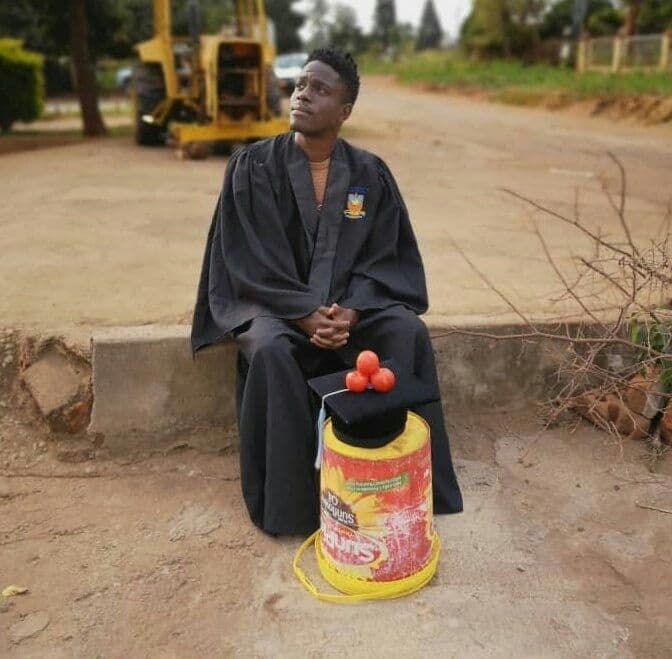
In short
- Zimbabwean graduates are struggling to secure employment due to limited formal job opportunities, experience requirements, skills mismatches and wider economic challenges affecting the labour market.
For thousands of young Zimbabweans, graduating from university or college is supposed to mark the beginning of a new chapter: finding employment, becoming financially independent and putting years of education into practice.
However, for many graduates, the reality is increasingly different.
Instead of securing employment, they find themselves spending months or even years submitting applications, attending interviews and waiting for opportunities that rarely materialise. Some eventually abandon their professional ambitions and turn to informal trading, self-employment or jobs unrelated to their qualifications.
This raises an important question: Why are Zimbabwe's graduates struggling to find employment despite investing years in education?
The answer goes beyond a shortage of vacancies. It reflects deeper challenges within the country's economy, education system and labour market.
Graduate unemployment threatens to waste valuable human capital, increase economic pressure on households and undermine the benefits of investing in higher education.
AN ECONOMY THAT IS NOT CREATING ENOUGH FORMAL JOBS
One of the biggest challenges is the limited capacity of the formal economy to absorb the growing number of graduates entering the labour market.
Zimbabwe continues to produce graduates in fields such as engineering, finance, education, information technology, agriculture and business. However, the expansion of employment opportunities has not kept pace with the supply of qualified job seekers.
Businesses facing financial constraints, limited investment, high operating costs and uncertain economic conditions may struggle to expand their operations or recruit additional employees.
Consequently, graduates compete for a relatively small number of formal positions.
The problem is therefore not simply that graduates lack qualifications. In many cases, the economy does not have enough suitable opportunities to accommodate the available skills.
THE EXPERIENCE BARRIER: HOW CAN GRADUATES GAIN EXPERIENCE WITHOUT GETTING JOBS?
Another major frustration is the experience requirement included in many job advertisements.
Employers frequently demand candidates with previous work experience, even when advertising entry-level positions.
This creates a difficult situation for recent graduates who have completed their studies but have not had sufficient opportunities to gain professional experience.
A graduate may possess the required academic qualification but still be rejected because another applicant has two or three years of workplace experience.
Internships and graduate trainee programmes could help address this challenge. However, these opportunities are not always accessible or available in sufficient numbers.
The result is a cycle in which graduates struggle to secure their first jobs because they lack experience, while they cannot gain that experience without being given an opportunity.
ARE UNIVERSITIES PRODUCING THE SKILLS EMPLOYERS NEED?
The relationship between higher education and the labour market is another area that deserves attention.
Academic qualifications remain important, but employers increasingly expect graduates to demonstrate practical abilities, technical competence, communication skills and the capacity to solve real workplace problems.
In certain fields, theoretical knowledge alone may not be enough to prepare someone for the demands of a professional environment.
This does not mean universities are failing to educate students. Rather, it raises questions about whether academic programmes are consistently adapting to changing industry requirements.
Stronger partnerships between universities, colleges and businesses could help ensure that students graduate with both academic knowledge and practical experience.
TOO MANY APPLICANTS, TOO FEW VACANCIES
The competition for available jobs has also become increasingly difficult.
A single graduate trainee advertisement can attract applications from hundreds of qualified candidates. Employers therefore have the advantage of selecting from a large pool of applicants, while many capable graduates remain unsuccessful.
In such an environment, having a degree does not automatically guarantee employment.
Additional qualifications, professional certifications, practical experience, digital skills and professional networks can influence recruitment decisions.
However, this also creates another challenge: graduates from financially disadvantaged backgrounds may struggle to afford additional training or unpaid internships that could improve their chances.
THE GROWING REALITY OF INFORMAL EMPLOYMENT
For graduates who cannot secure formal employment, earning a living often becomes more urgent than pursuing a career related to their qualifications.
Some turn to vending, online businesses, cross-border trading, tutoring, freelance work and other forms of self-employment.
These activities can provide income and create opportunities. However, they may not offer the stability, benefits, career progression or professional development associated with formal employment.
Zimbabwe's labour market statistics illustrate the wider challenge. The Zimbabwe National Statistics Agency's Second Quarter 2025 Labour Force Survey reported unemployment of 28.9 percent among people aged 15–35. It also found that 49.2 percent of this age group were not in employment, education or training.
These figures describe the broader youth population, not graduates alone, but they highlight the difficult environment in which young job seekers are trying to establish themselves.
WHO SHOULD TAKE RESPONSIBILITY?
It would be unfair to place the entire responsibility on graduates by suggesting that they simply need to work harder, acquire more qualifications or become entrepreneurs.
Personal initiative matters, but individual effort cannot solve a structural shortage of employment opportunities.
Government has a role to play in creating an environment that encourages investment, industrial expansion and business growth. Stronger manufacturing, agriculture, mining, technology and service industries could create more opportunities for skilled professionals.
Universities and colleges must continue strengthening practical training, industry partnerships and career guidance.
Employers should also consider expanding internship programmes and offering opportunities to promising candidates who may lack extensive professional experience.
Graduates, on the other hand, can improve their competitiveness by developing practical skills, gaining relevant experience where possible, building professional networks and exploring legitimate self-employment opportunities.
However, these measures should complement job creation, not replace it.
THE BIGGER QUESTION: WHAT IS THE VALUE OF EDUCATION WITHOUT OPPORTUNITY?
Zimbabwe's graduate unemployment challenge is more than an individual struggle. It is an economic and development issue.
When qualified people remain unemployed or are forced into work unrelated to their training, the country risks underutilising its human capital.
Families invest substantial resources in education, while graduates spend years developing knowledge and skills that could contribute to national development.
The country cannot afford to treat this situation as normal.
Education should prepare people to contribute meaningfully to society and the economy. But that contribution becomes difficult when opportunities are limited.
Ultimately, Zimbabwe must confront a difficult reality: producing more graduates without creating enough productive jobs will continue to widen the gap between education and employment.
The challenge is no longer just about getting more young people into universities and colleges. It is about building an economy capable of giving those graduates a meaningful opportunity to use what they have learned.
By Simba Zimunya
How we reported this
The Granite Post Zimbabwe verifies documents, interviews sources and checks official records before publication. Our editorial standards explain what we require before a story runs.
Read our editorial standardsAbout the author
Simba Zimunya reports for The Granite Post, focused on accountability and public-interest journalism.
View author profileLatest Updates



Related Articles



Premium
View all Premium →
ZiG Inflation Falls to 2.9% but Bank Loans Still Cost Over 40%
Annual ZiG inflation dropped to 2.9% in August, the lowest since independence, 18 April 1980. But the central bank says some banks have not cut lending rates since June, leaving borrowers paying more than 40% while prices barely move.


Support independent journalism
Support our journalismSupport The Granite Post Zimbabwe
Your subscription helps fund investigations, public-interest reporting and deeper Zimbabwe coverage.

Comments
Join the conversation
Share your view.
No comments yet. Be the first.