
Business & Economy
Taguta Business Centre Officially Opens in Manicaland By Tendai Ruben Mbofana3 min read
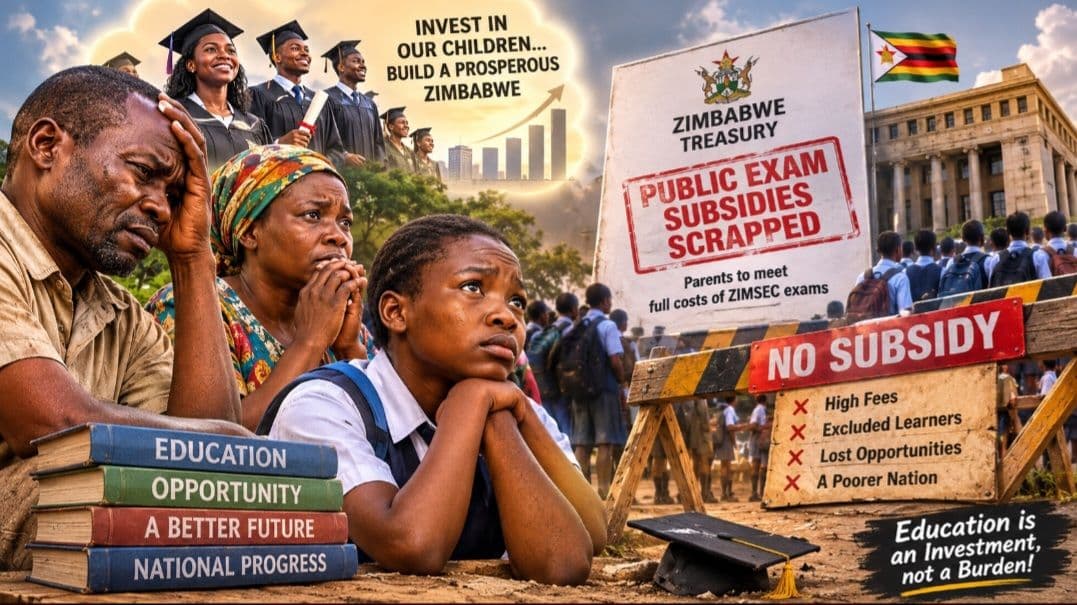
A nation’s soul is revealed by how it treats its children.
The announcement by the Zimbabwean Treasury to scrap universal state subsidies for national public examinations is a tragic turning point for public education.
Framing this policy shift as an exercise in fiscal consolidation designed to trim state expenditure directly exposes a fundamental misalignment of national priorities.
When a nation begins to treat the basic certification of its young people as a dispensable operational burden rather than an essential national investment, it sends a heartbreaking signal.
A state that treats the qualification of its youth as a financial strain to be discarded has lost sight of its core mandate. The long-term costs of youth unemployment and lost economic potential will dwarf any short-term savings.
The state has relinquished its duty to safeguard the future of its children.
Globally, standard educational assessment is recognized as a fundamental public good.
From advanced European economies to developing nations across Asia and Africa, governments heavily subsidize or fully absorb public examination fees.
They do so not out of charity, but because human capital development is the bedrock of sovereign progress.
Advanced nations understand that ensuring every child can complete secondary school and sit for national exit exams yields long-term dividends.
These gains in productivity, innovation, tax revenues, and national stability far outweigh the immediate cost of test papers.
Zimbabwe’s decision to move in the opposite direction isolates us from global best practices and undermines our long-term economic prospects.
The practical reality of this decision is devastating.
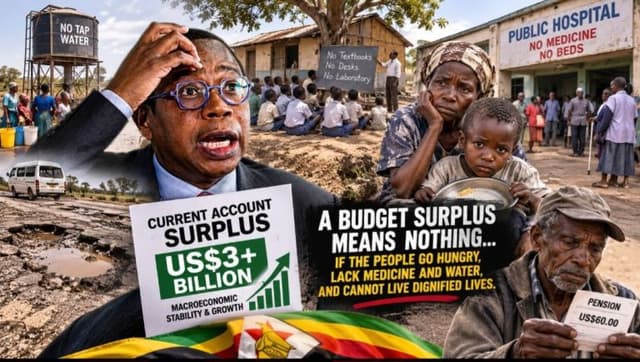
An estimated 85 percent of Zimbabweans live in poverty, while nearly nine out of ten working-age adults survive on informal, hand-to-mouth self-employment.
In such an impoverished environment, asking parents to shoulder the full cost of ZIMSEC examinations is an impossible demand.
For millions of informal traders, subsistence farmers, and casual laborers, doubling or tripling exam registration costs presents an absolute financial wall.
Thousands of learners—having spent eleven years sitting through primary and secondary education—will be forced to walk away at the final hurdle without a single certificate to show for their effort.
Years of learning will be reduced to zero formal value in the job market, locking an entire generation into intergenerational poverty.
The government’s assurance that “vulnerable children” will remain protected through targeted safety nets like the Basic Education Assistance Module (BEAM) lacks practical credibility.
In a country where poverty is widespread and structural, the line between a “vulnerable” learner and a “regular” learner is largely an administrative illusion.
Narrowing subsidies to a tightly verified minority requires costly bureaucratic bureaucracy that invariably leaves out millions of genuinely destitute families who simply lack formal documentation or political access.
More critically, what guarantees exist that BEAM will suddenly deliver?
The program’s history is plagued by chronic underfunding, severe budget arrears, and delayed disbursements to schools.
Expecting a struggling social protection scheme to absorb thousands of newly exposed candidates is irresponsible.
The state routinely fails to clear its existing financial obligations.
Relying on that same struggling system to cover candidate fees will inevitably leave thousands of eligible, impoverished children barred from sitting for their exams.
The most troubling aspect of this policy is its fundamental logic.
Education is never a burden; it is the single most powerful engine of social mobility and nation-building.
Trimming public expenditure by stripping away exam support yields negligible short-term budgetary relief while creating massive long-term societal liabilities.
This is no different from a parent who stops paying for a child’s education just to trim household expenses.
The future costs of skyrocketing youth unemployment, lost economic potential, and expanding social decay will dwarf whatever minor savings the Treasury claims to achieve today.
A state that views the qualification of its youth as a financial strain to be discarded has lost sight of its core mandate.
Stripping away public examination subsidies in an environment of widespread hardship does not optimize expenditure.
Instead, the government is closing the door of opportunity on millions of ambitious young minds.
Our children deserve a government that invests in their potential, believes in their capabilities, and treats their education as the nation’s most precious asset.
Removing these subsidies proves the exact opposite.
● Tendai Ruben Mbofana is a social justice advocate and writer. Please feel free to contact him on +263715667700 or mbofana.tendairuben73@gmail.com
The Granite Post Zimbabwe verifies documents, interviews sources and checks official records before publication. Our editorial standards explain what we require before a story runs.
Read our editorial standardsI am a social justice advocate and writer, having started my activism from high school in 1991. My passion is in speaking out and standing up against all forms of injustices and oppression, esp against ordinary citizens
View author profile



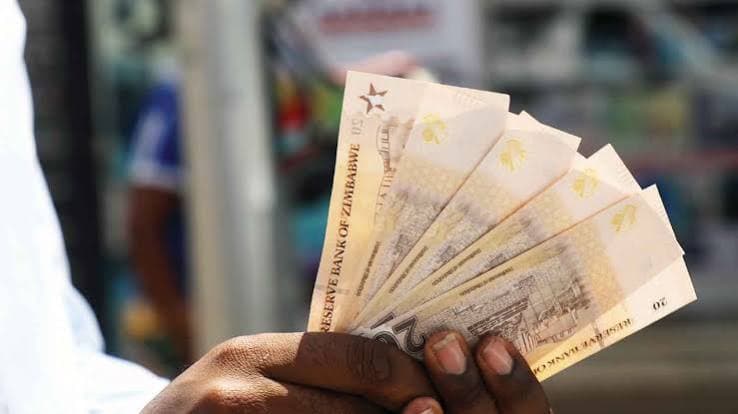
Annual ZiG inflation dropped to 2.9% in August, the lowest since independence, 18 April 1980. But the central bank says some banks have not cut lending rates since June, leaving borrowers paying more than 40% while prices barely move.
Your subscription helps fund investigations, public-interest reporting and deeper Zimbabwe coverage.


Comments
Join the conversation
Share your view.
No comments yet. Be the first.