
Opinion & Analysis
Is Zimbabwe’s Education System Preparing Youth for Unemployment?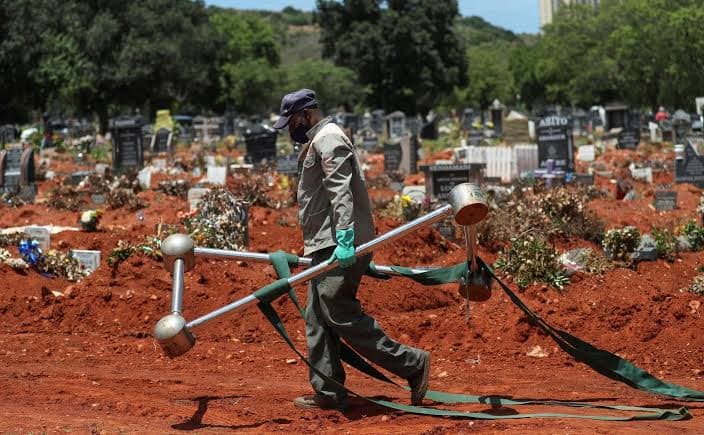
The figures, contained in recent council minutes and reported on Saturday, show that a substantial portion of the city's existing cemetery land has already been occupied.
Although the figures suggest that between 40 and 50 percent of the land remains unused, they do not establish how many graves are still available or how long the remaining space will last.
Bulawayo currently relies on Luveve and Umvutcha as its two active cemeteries. Older burial grounds, including West Park, Hyde Park and Athlone, have largely been closed to new graves, although certain reserved burials and second interments are permitted.
The pressure has prompted the local authority to identify additional land, with cemetery expansion becoming an increasingly important part of the city's long-term planning.
The city must develop additional burial space before existing cemeteries reach capacity, but the remaining years of capacity are not yet known.
In September 2025, Bulawayo City Council approved the allocation of 54 hectares for an extension of Luveve Cemetery, with the proposed site expected to accommodate approximately 100,000 graves.
The land, identified as Stand 10365 Luveve, lies north of the existing cemetery extension.
The council's planning department said the project would require the construction of nearly two kilometres of access road, alongside improvements to existing roads serving the area.
The council also directed its Health Services Department to undertake the processes necessary for the site to be officially designated for cemetery use, including environmental requirements.
The proposed expansion reflects a wider challenge facing the city: securing land is only one part of providing burial space. New sites must also be accessible, properly developed and ready for use before existing cemeteries reach capacity.
Official council records show that Bulawayo recorded 449 burials across its municipal cemeteries in December 2025.
Of these, 299 took place at Luveve Extension and 124 at Umvutcha Park, making the two cemeteries responsible for the overwhelming majority of burials recorded that month.
The same records show that 10 bodies were cremated during December, illustrating the continued preference for burial over cremation.
In May 2026, the council adopted a new cemeteries policy regulating burial procedures, grave reservations, cremations and the use of closed burial grounds.
The policy also provides for second interments under specified conditions, allowing certain family members to share existing graves.
However, neither the latest land utilisation figures nor the previously published burial statistics establish when Bulawayo's active cemeteries could become full.
That calculation would require updated figures for available grave plots, annual burial demand and the operational status of proposed extensions.
For the city, the immediate planning challenge is ensuring that new burial space becomes available before existing facilities can no longer accommodate demand.
The Granite Post Zimbabwe verifies documents, interviews sources and checks official records before publication. Our editorial standards explain what we require before a story runs.
Read our editorial standardsTarisai Ncube reports for The Granite Post, focused on accountability and public-interest journalism.
View author profile



Annual ZiG inflation dropped to 2.9% in August, the lowest since independence, 18 April 1980. But the central bank says some banks have not cut lending rates since June, leaving borrowers paying more than 40% while prices barely move.
Your subscription helps fund investigations, public-interest reporting and deeper Zimbabwe coverage.





Comments
Join the conversation
Share your view.
No comments yet. Be the first.